- The 2026 Giro d’Italia runs from May 8 to May 31 across 21 stages.
- Riders will cover around 3,450 km with roughly 50,000 metres of climbing.
- The race begins with a Grande Partenza in Bulgaria and finishes in Rome.
- The route briefly crosses into Switzerland during the Alpine stages.
- Three stages in Bulgaria along Black Sea and inland
- Key summit finishes include Blockhaus, Corno alle Scale, Pila, Carì, Piani di Pezzè and Piancavallo.
- The final week in the Alps and Dolomites will likely decide the battle for the pink jersey.
Lauren Wolff — 4/28/2026
Inside the 2026 Giro d’Italia route: the climbs that could decide the race
The 2026 Giro d’Italia will likely be decided in the high mountains, with key summit finishes like Blockhaus, Carì, Piani di Pezzè and Piancavallo shaping the general classification in the final Alpine and Dolomite week.
Kurze Zusammenfassung
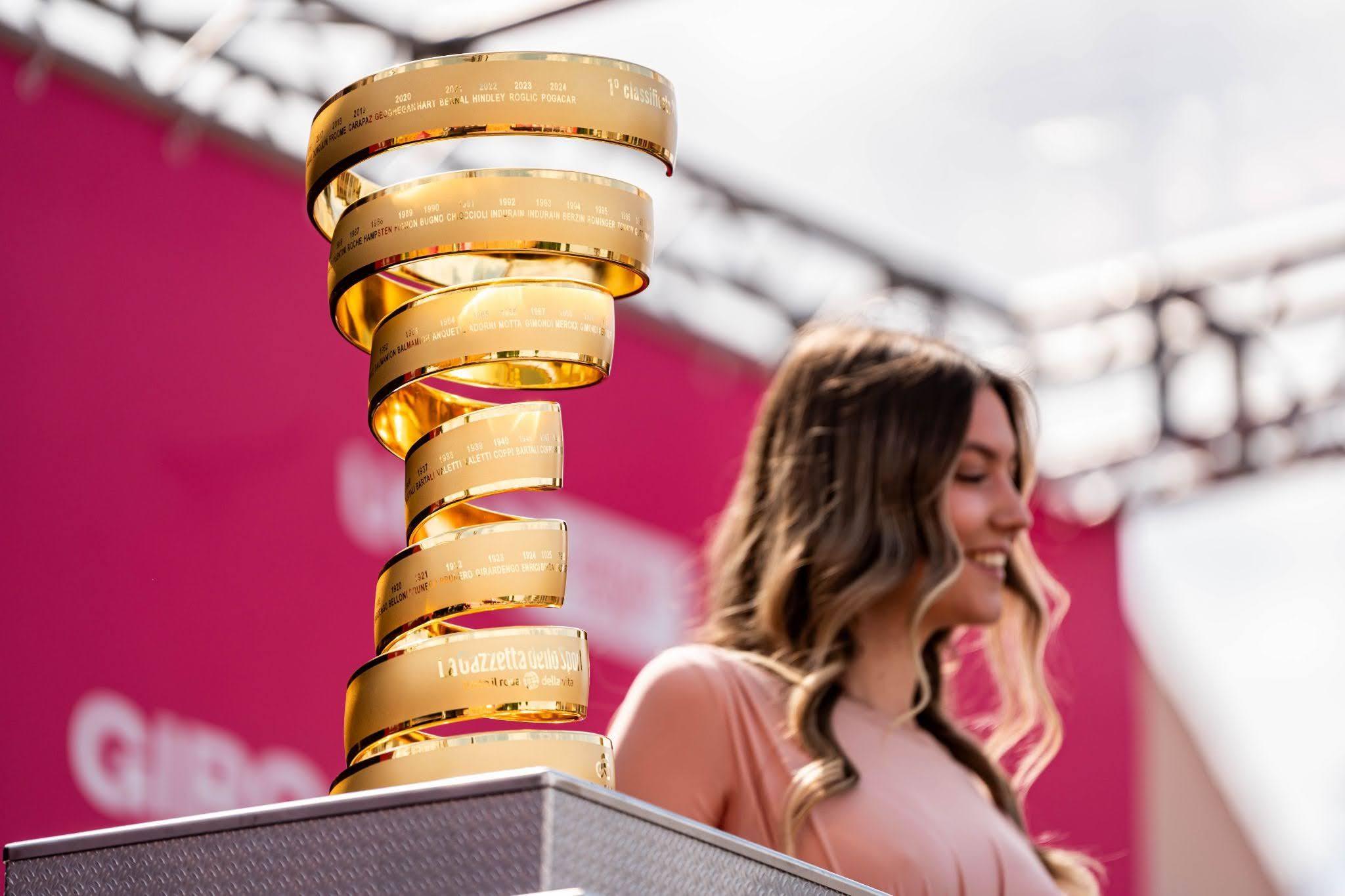
The Giro d’Italia is one of cycling’s three Grand Tours, alongside the Tour de France and La Vuelta a España, and each spring it sends the world’s best riders across Italy for three weeks of racing. The 2026 edition runs from May 8 to May 31, covering around 3,450 kilometres and roughly 50,000 metres of climbing across 21 stages before the race finishes in Rome.
This year’s race begins with a Grande Partenza in Bulgaria, an unusual starting point that takes the peloton along the Black Sea coast before the route returns to Italy. From there, the race gradually moves north through the peninsula, briefly crossing into Switzerland during the Alpine stages, before eventually reaching the final mountain challenges and the closing stage in the Italian capital.
For many riders and fans, the Giro only really begins when the road tilts upward. The early stages establish the rhythm of the race, but it is the long climbs of the Apennines, Alps and Dolomites that reveal which riders still have the strength to climb after nearly three hectic and demanding weeks.
This year’s route builds toward several major summit finishes, including Blockhaus, Corno alle Scale, Pila, Carì, Piani di Pezzè and Piancavallo, each arriving at moments when accumulated fatigue begins to shape the outcome of the race.
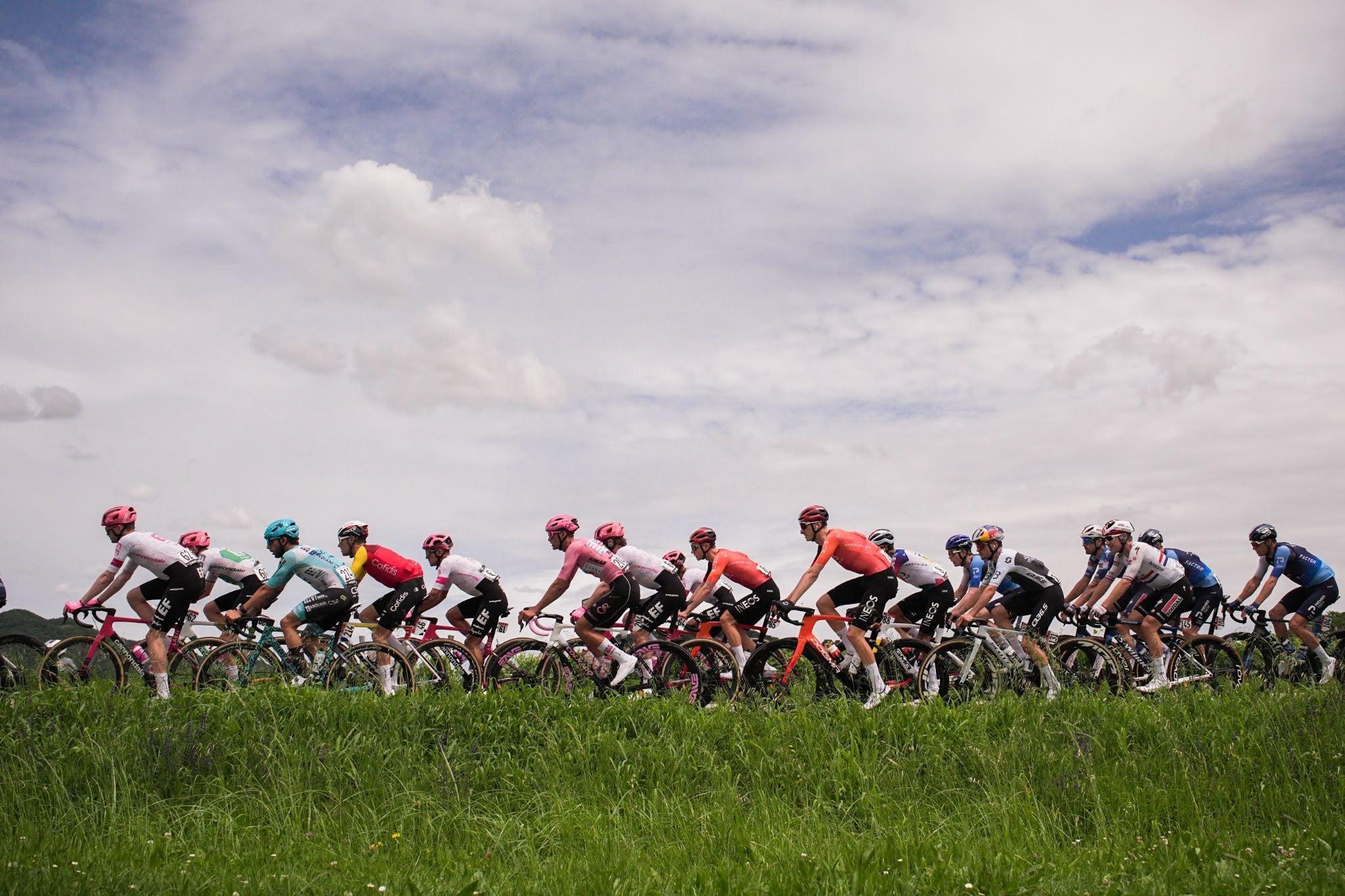
Route at a glance: Giro d’Italia 2026
Dates: May 8 - May 31, 2026
Stages: 21
Distance: around 3,450 km
Elevation gain: around 50,000 m
Grande Partenza: Bulgaria
Countries visited: Bulgaria, Italy, Switzerland
Final stage: Rome, Italy
What is the Giro d’Italia?
The Giro d’Italia is Italy’s most prestigious cycling race, organised by RCS Sport and part of the UCI WorldTour calendar. Since its first edition in 1909, the Giro has become one of the defining events of professional cycling, combining dramatic mountain landscapes with unpredictable racing.
Across three weeks, riders compete not only for stage victories but also for several classification jerseys that reward different strengths throughout the race.
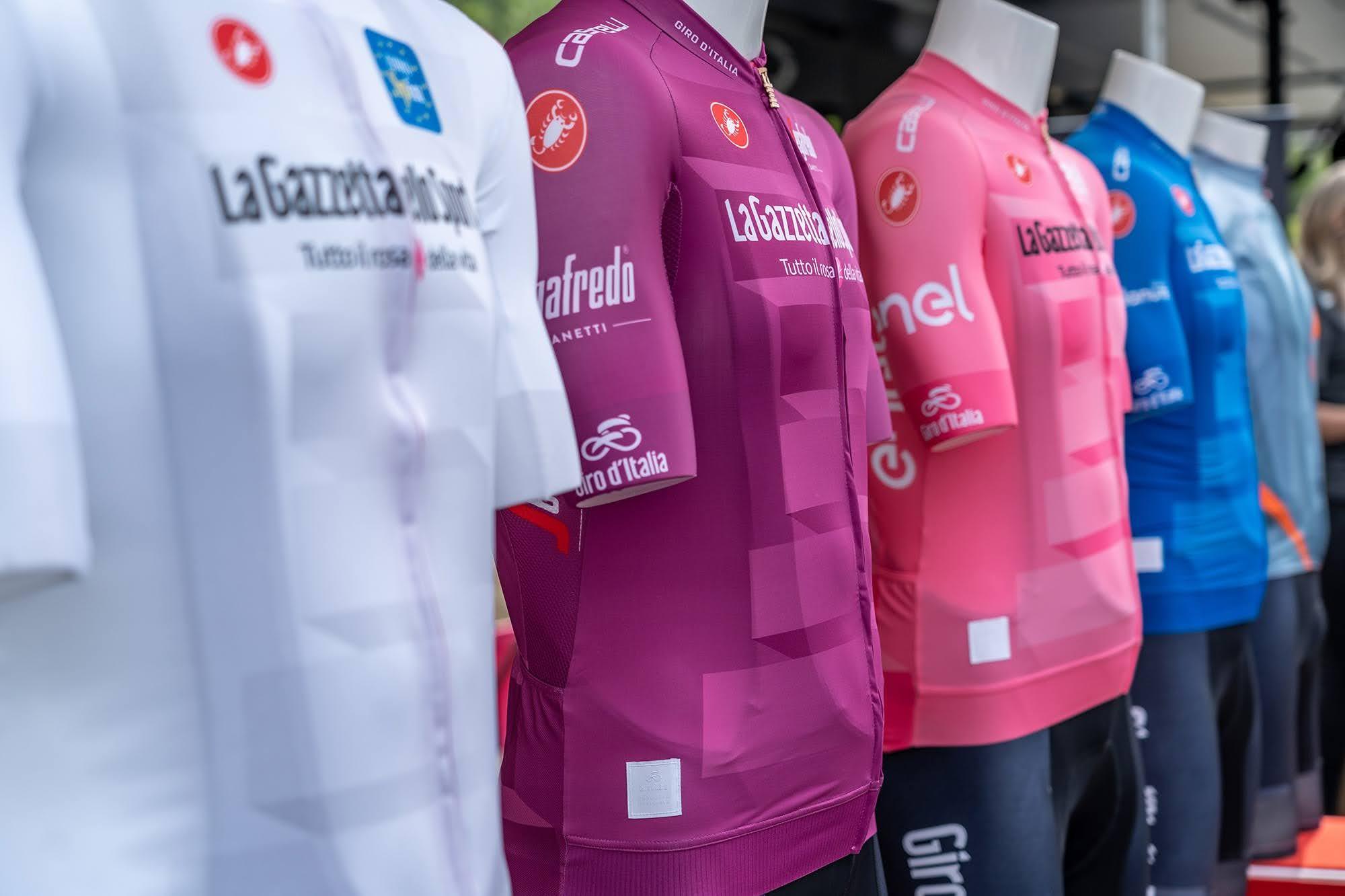
Giro d’Italia classification jerseys
The Maglia Rosa is the most iconic symbol of the Giro. Introduced in 1931, its colour matches the pink pages of La Gazzetta dello Sport, the newspaper that created the race.
| Jersey | Italian name | What it represents |
|---|---|---|
| Pink jersey | Maglia Rosa | Overall leader of the race |
| Cyclamen jersey | Maglia Ciclamino | Points classification (sprinters) |
| Blue jersey | Maglia Azzurra | King of the Mountains |
| White jersey | Maglia Bianca | Best young rider |
| Italian name | |
|---|---|
| Pink jersey | Maglia Rosa |
| Cyclamen jersey | Maglia Ciclamino |
| Blue jersey | Maglia Azzurra |
| White jersey | Maglia Bianca |
| What it represents | |
|---|---|
| Pink jersey | Overall leader of the race |
| Cyclamen jersey | Points classification (sprinters) |
| Blue jersey | King of the Mountains |
| White jersey | Best young rider |
Giro 2026 route numbers
- 21 stages
- 3,450 km total distance
- Average km /day 165
- 50,000 m elevation gain
- There are three rest days (including transfer from Bulgaria)
- Multiple summit finishes
- High mountain stages in the Apennines, Alps and Dolomites
As with all Grand Tours, the Giro includes two rest days, giving riders a brief chance to recover before the decisive mountain stages later in the race.
What is the 2026 Giro d'Italia Time Trial?
There are no team time trials (TTT) in this edition; instead, the race relies on a single, unusually long individual time trial (ITT). Scheduled for Stage 10, A single 40.2 km individual time trial on the Tuscan coast is likely to favour specialists.
What is the route of the 2026 Giro d’Italia?
The 2026 Giro route follows the classic structure of a Grand Tour, beginning with flatter stages before gradually building toward more selective terrain.
In the opening week, sprint teams and breakaway specialists often dominate the racing. General Classification (GC) contenders usually ride conservatively during this phase, focusing on positioning and avoiding time losses while waiting for the first serious climbs.
As the race progresses, the terrain becomes increasingly demanding. The Apennine mountains introduce the first sustained climbs, followed by the higher roads of the Alps and Dolomites, which include the Duran, Staulanza, Giau and Falzarego, forming part of the queen stage.
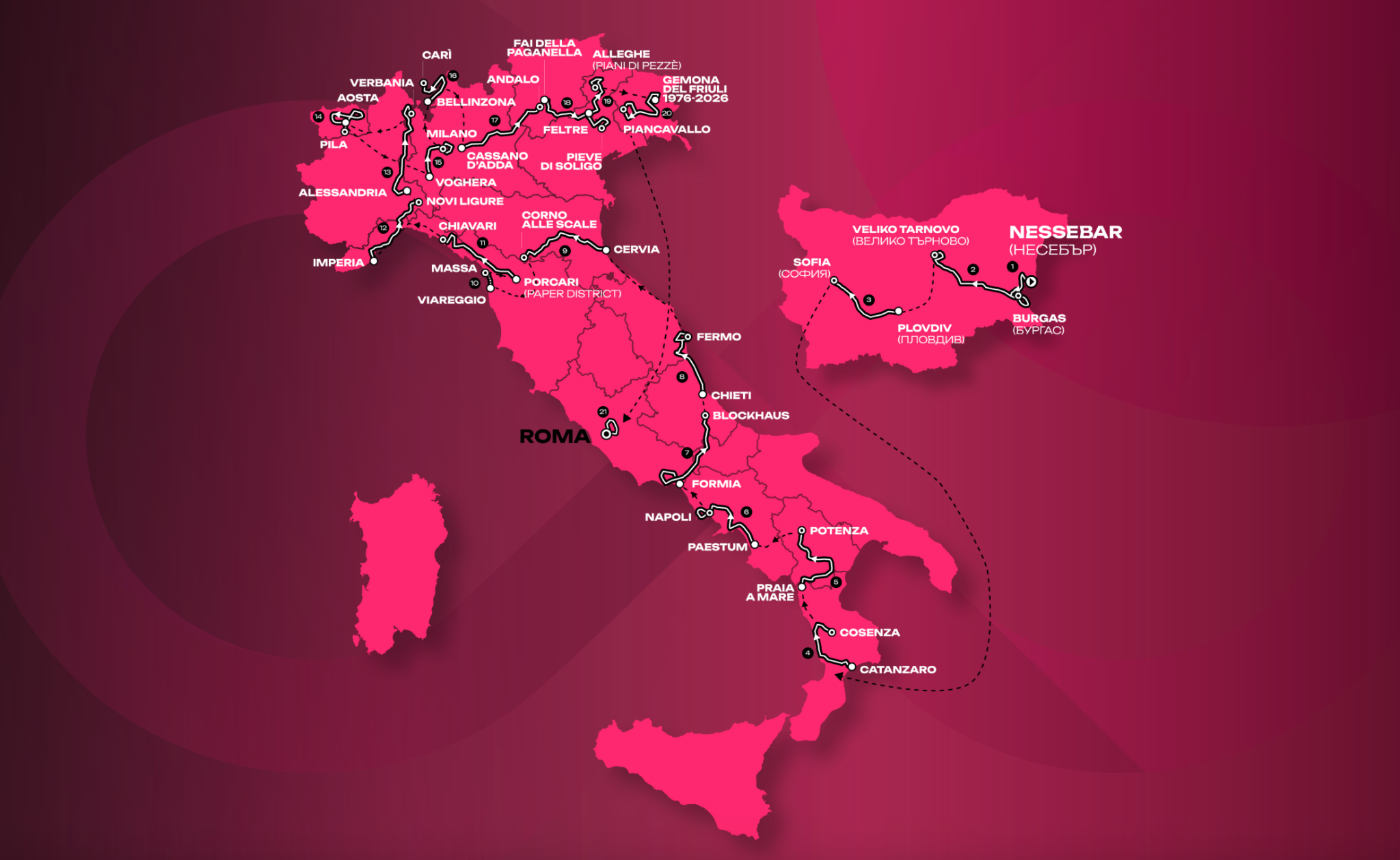
Where does the race begin to take shape?
The first summit finish often marks the moment when the Giro begins to reveal its hierarchy. Until that point, the general classification may remain tightly grouped, with only small time gaps separating the favourites.
Once the peloton reaches the mountains, however, the race dynamic changes. Teams begin setting a steady tempo on the climbs, gradually thinning the group and isolating rival leaders.
These early mountain stages rarely decide the race outright, but they establish an important baseline. Riders who struggle here often find themselves chasing time later in the race.
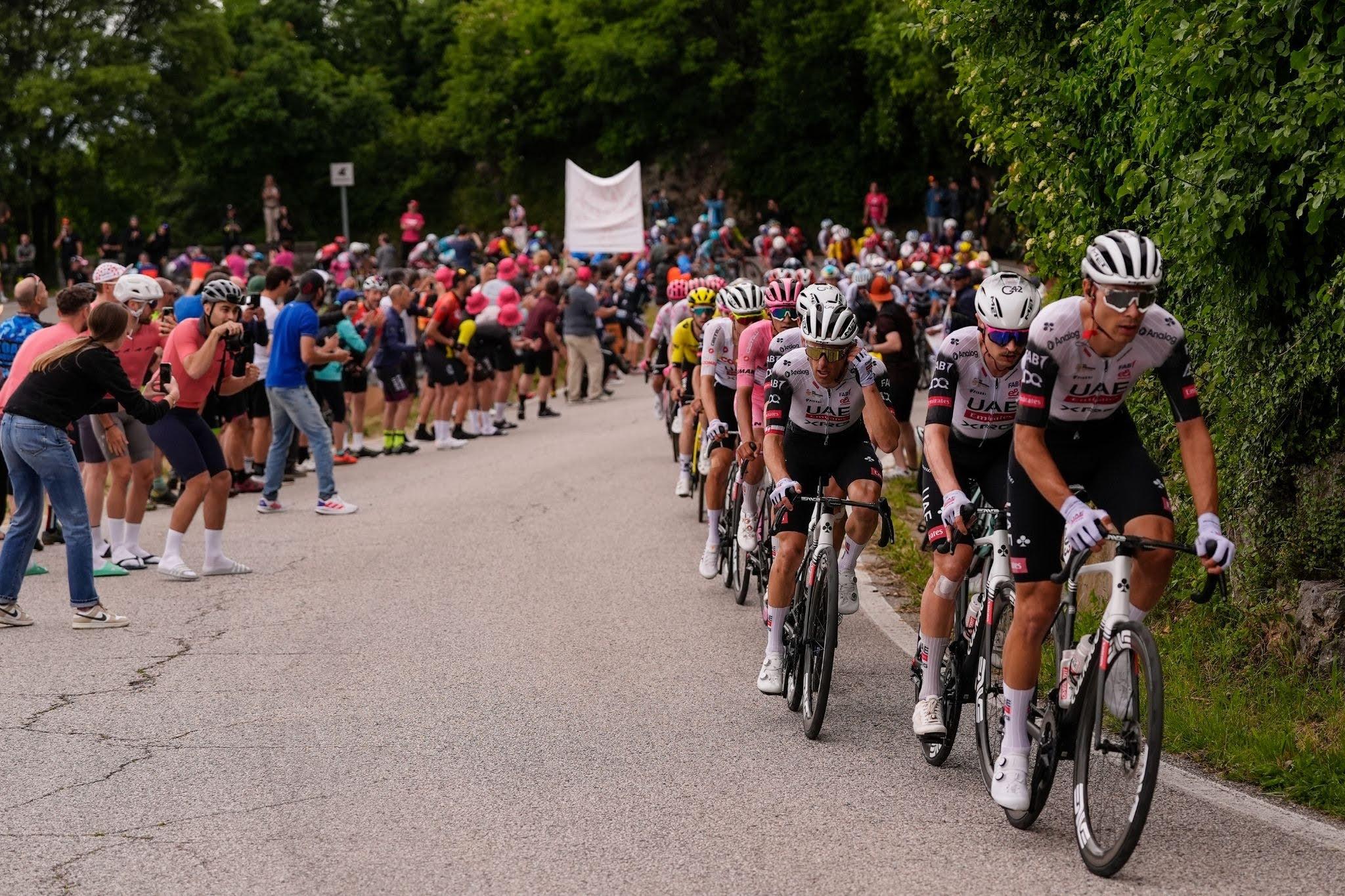
The climbs that could decide the 2026 Giro d’Italia
While the Giro is shaped by the cumulative difficulty of three weeks of racing, several climbs in the 2026 route stand out as moments where the general classification could change dramatically.
Experience the Giro d’Italia climbs on ROUVY
Ride the legendary Giro climbs from your home with ROUVY's immersive video routes.
Key climbs of the 2026 Giro d’Italia
| Climb | Stage | Region | Why it matters |
|---|---|---|---|
| Blockhaus | Stage 7 | Abruzzo | First summit finish |
| Corno alle Scale | Stage 9 | Emilia-Romagna | Early mountain test |
| Pila | Stage 14 | Alps | Long Alpine ascent |
| Carì | Stage 16 | Switzerland | Start of final week |
| Piani di Pezzè | Stage 19 | Dolomites | Queen stage finale |
| Piancavallo | Stage 20 | Dolomites | Final summit finish |
| Stage | |
|---|---|
| Blockhaus | Stage 7 |
| Corno alle Scale | Stage 9 |
| Pila | Stage 14 |
| Carì | Stage 16 |
| Piani di Pezzè | Stage 19 |
| Piancavallo | Stage 20 |
| Region | |
|---|---|
| Blockhaus | Abruzzo |
| Corno alle Scale | Emilia-Romagna |
| Pila | Alps |
| Carì | Switzerland |
| Piani di Pezzè | Dolomites |
| Piancavallo | Dolomites |
| Why it matters | |
|---|---|
| Blockhaus | First summit finish |
| Corno alle Scale | Early mountain test |
| Pila | Long Alpine ascent |
| Carì | Start of final week |
| Piani di Pezzè | Queen stage finale |
| Piancavallo | Final summit finish |
Blockhaus
The bucket-list Blockhaus climb in the Majella massif of Abruzzo is expected to provide the first real test for the general classification contenders after the longest day in the saddle. This long and brutal Apennine ascent will demand a steady climbing rhythm over sustained, steep gradients in the Majella, the highest massif in the Apennines.
Because the stage finishes at the summit, the peloton will arrive at the climb after several hours of racing before the decisive kilometres begin. Blockhaus has appeared several times in Giro history and often marks the first moment when the strongest climbers begin to separate themselves from the rest of the field.
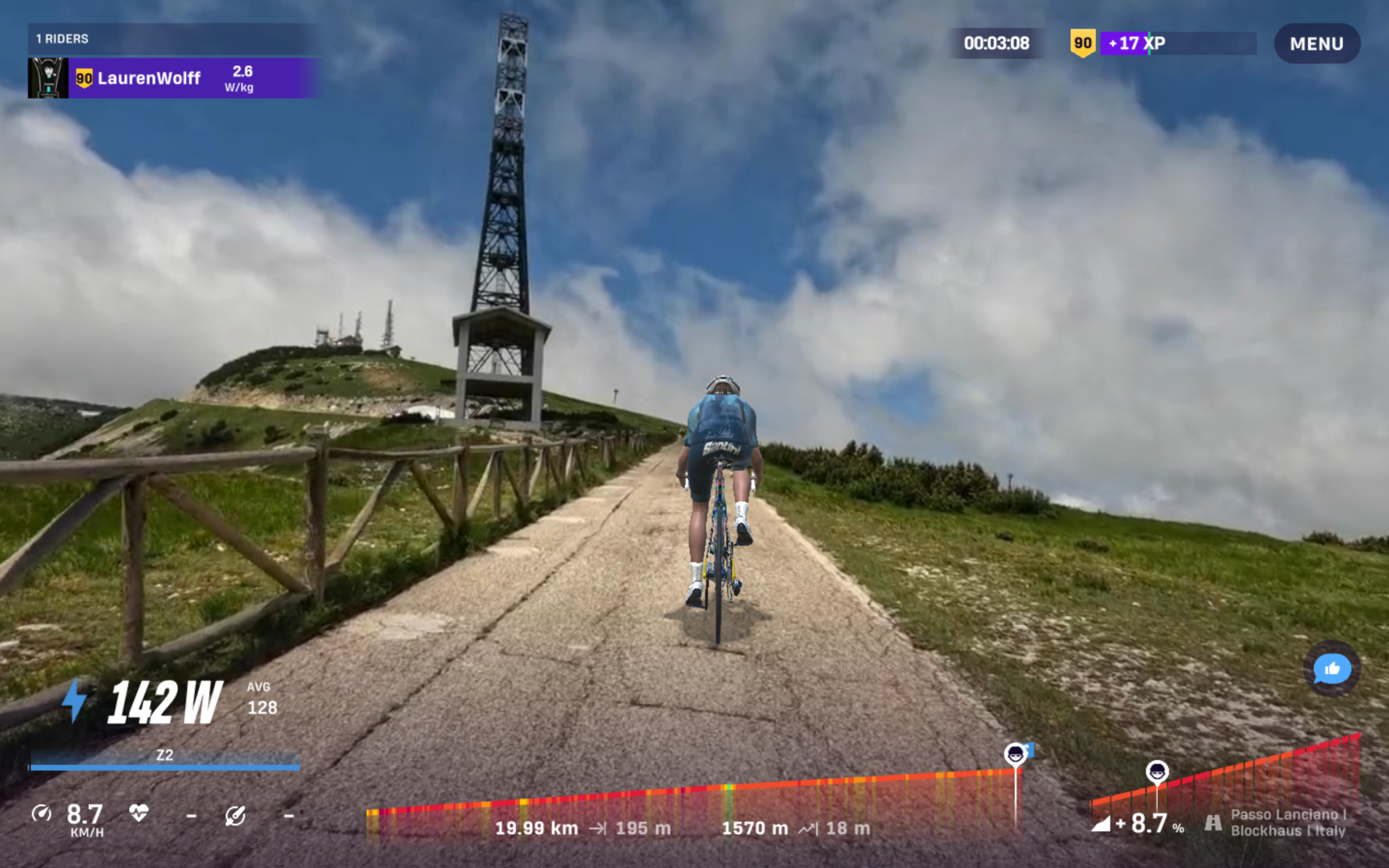
- Stage: 7
- Date: May 15
- Location: Abruzzo, in the Maiella massif near the town of Roccamorice.
- Why it matters: First summit finish of the race with 4,500m of climbing under the belt.
- Distance: 20 km
- Metres climbing: 1,588 m
- Average gradient: 8%
- Max gradient: 14,5 %
- 🚴 RIDE IT ON ROUVY
Corno alle Scale
Located in the northern Apennines, Corno alle Scale provides one of the first true mountain stages of the race. The route ascends gradually in the latter half until the final 12,8 kilometres, which rise steadily until the final 3 kilometres, which present a 10% average gradient. By the time riders reach the final kilometres, the peloton is usually already reduced. Climbers looking to gain time may launch attacks here in an effort to establish an advantage before the larger Alpine stages later in the race.
- Stage: 9
- Date: May 17
- Location: Emilia-Romagna
- Why it matters: Early mountain stage, long summit finish with steep final gradients.
Pila
The ascent to Pila, a ski resort set on a high plateau in the Aosta Valley, signals the Giro’s arrival in the Alps. Compared with the sharper climbs earlier in the race. The climb to Pila is 15.9 kilometres long, requiring a steady tempo with the average gradient sitting at 7.3%.
By the second week of a Grand Tour, fatigue begins to accumulate across the peloton. Support riders become harder to keep around team leaders, which increases the likelihood of attacks from general classification contenders.
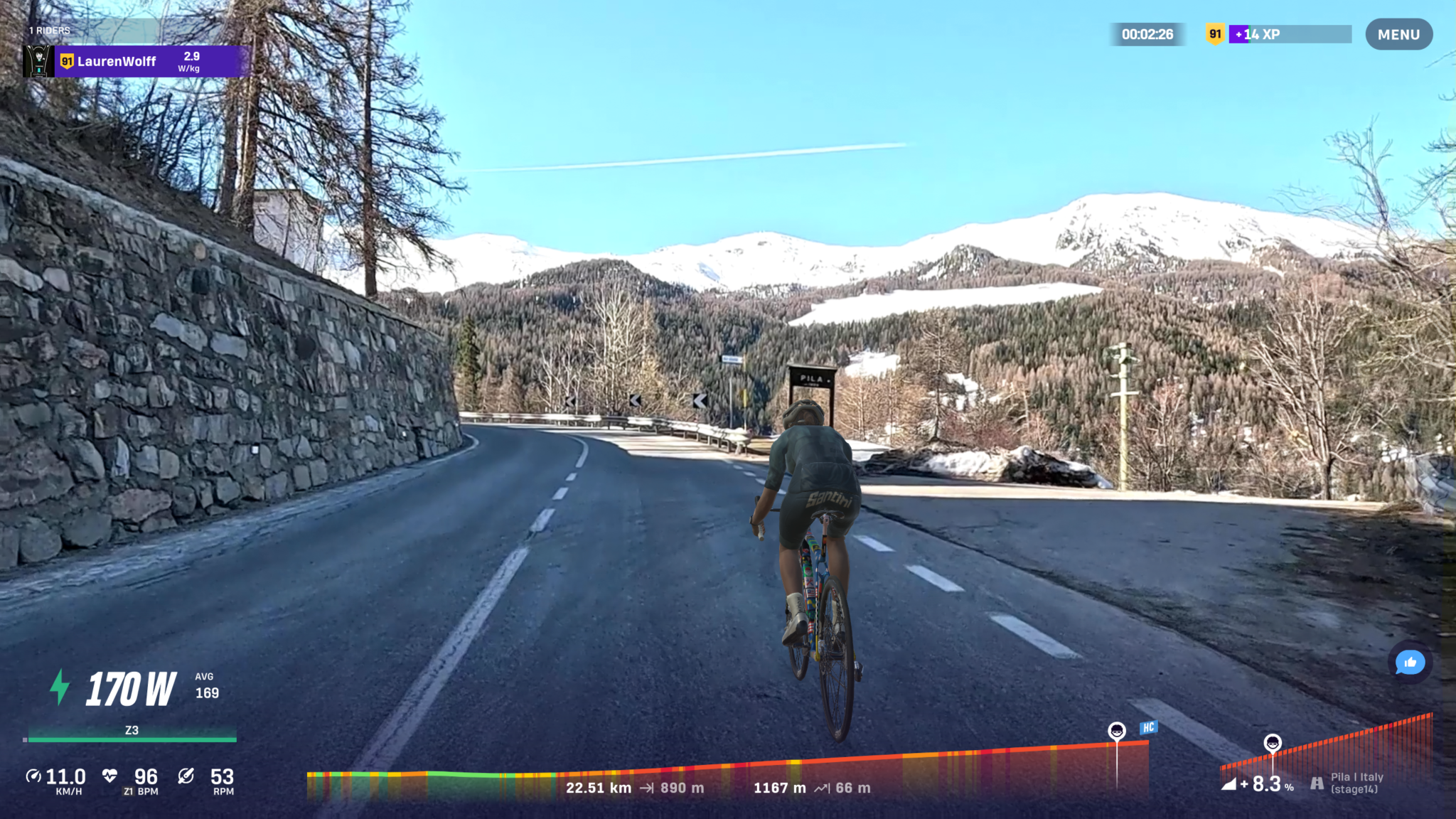
- Stage: 14
- Date: May 23
- Location: Aosta Valley
- Why it matters: Major Alpine climbing test with over 1,200 m of ascent
- Distance: 23,4 km
- Metres climbing: 1,233 m
- Average gradient: 4,81%
- Max gradient: 12%
- 🚴 RIDE IT ON ROUVY
Carì
The climb to Carì in Switzerland’s Ticino region forms the summit finish of one of the shortest but most intense mountain stages of the race. Although the stage itself is relatively compact, at 113 km, the route includes several earlier climbs that gradually wear down the peloton before the final ascent begins.
By the time riders reach the valley below Carì, the race is often already fragmented. After two weeks of racing, the steady gradients of the final climb can produce meaningful time gaps as fatigue begins to affect even the strongest riders.
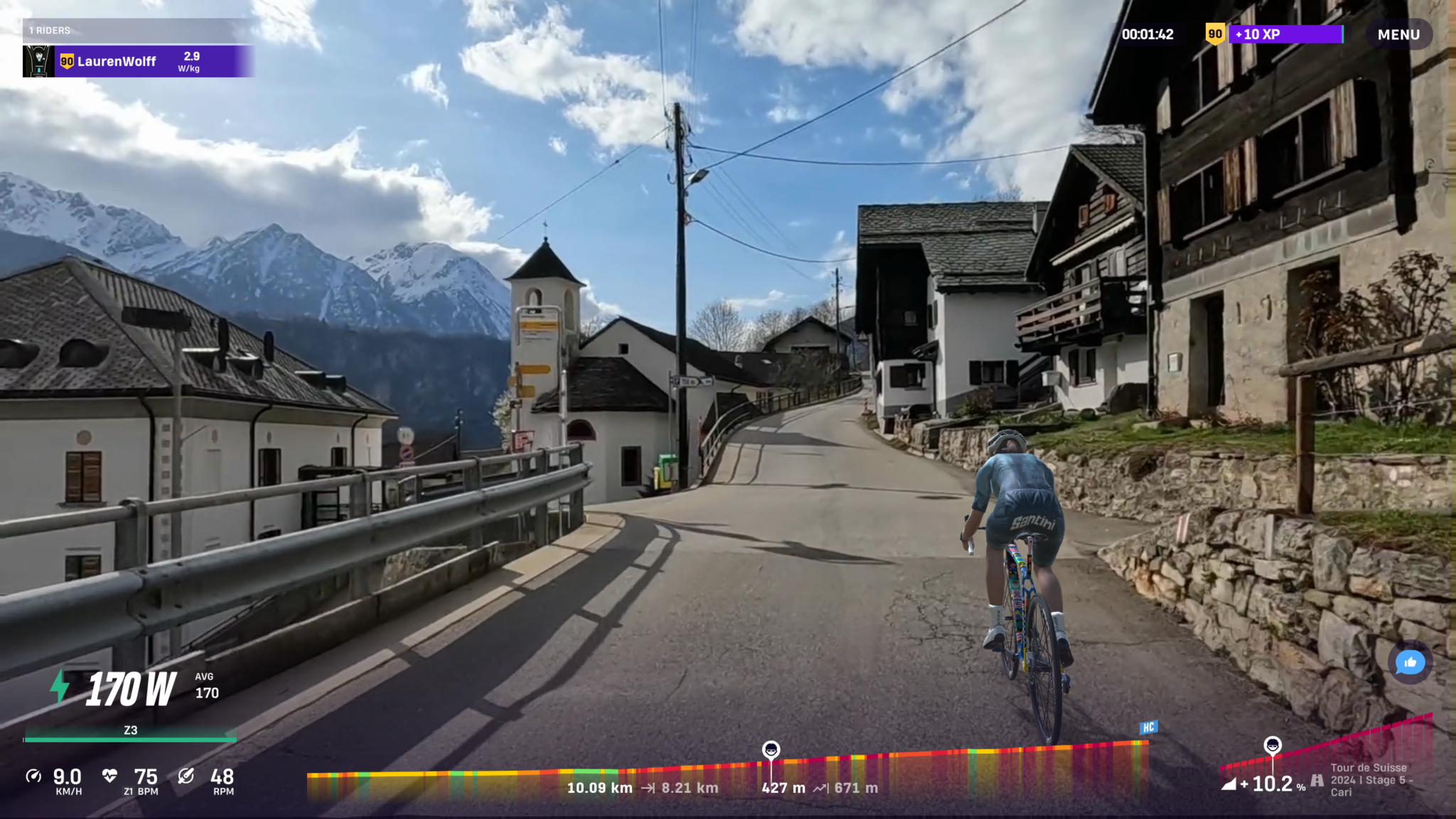
- Stage: 16
- Date: May 26
- Location: Ticino, Switzerland
- Why it matters: Opening summit finish of the final week
- Distance: 18,3km
- Metres climbing: 1098 m
- Average gradient: 6%
- Max gradient: 18%
- 🚴 RIDE IT ON ROUVY
Passo Giau
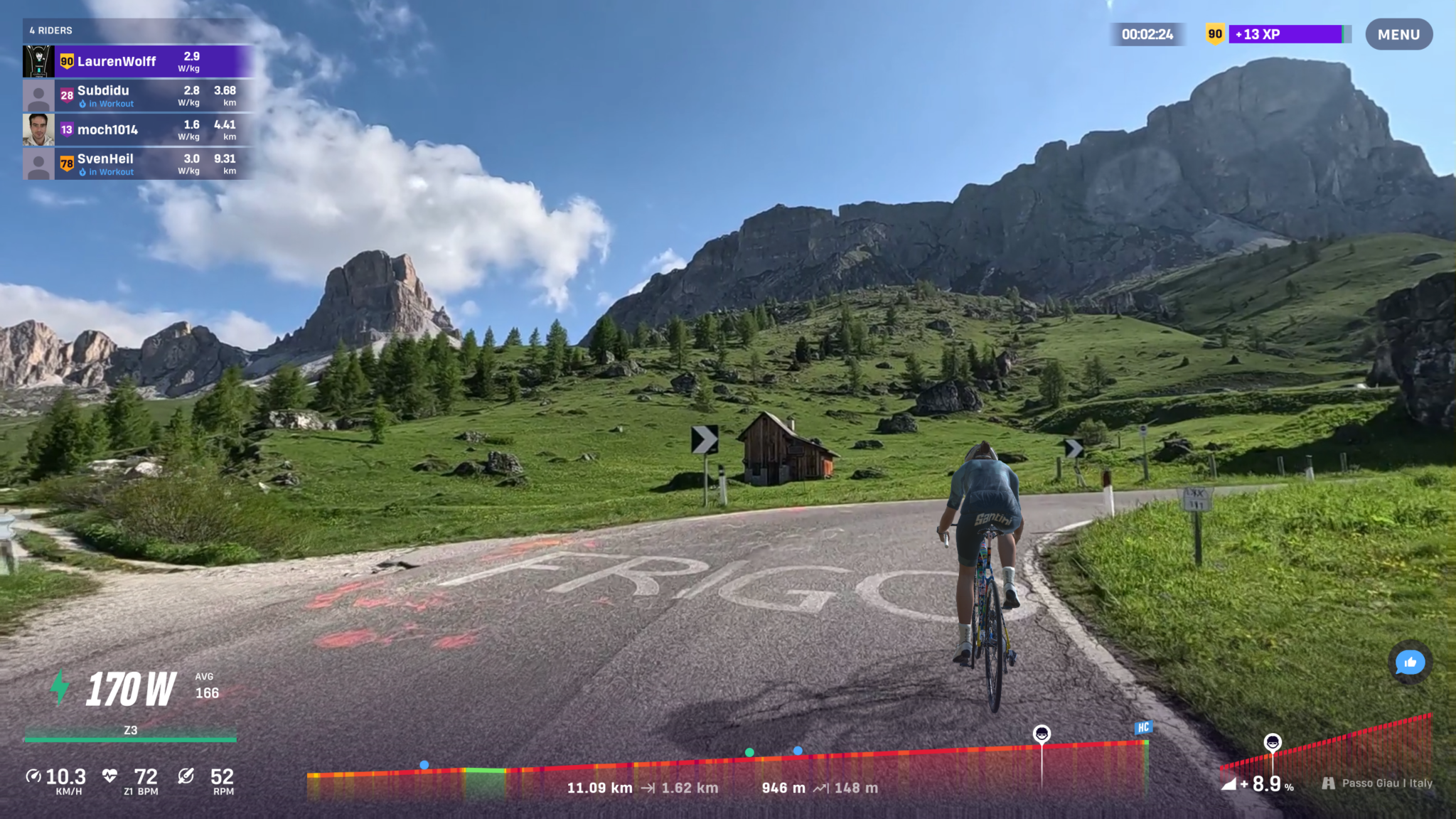
The Dolomites have long defined the Giro’s most dramatic stages. The course leading to this ascent from Feltre, after a local loop, includes several mountain passes. After 60km of flat, the riders face the double-digit gradient climbs of the Passo Duran, Passo Staulanza, Passo Giau, Passo Falzarego and the final ascent up the Piani di Pezzè, gradually reducing the group of contenders. By the time riders reach the final kilometres, only the strongest climbers are usually left near the front.
- Stage: 19
- Date: May 29
- Location: Dolomites
- Why it matters: Passo Giau, the Cima Coppi (the highest point of the race) at 2,236 m
- Distance: 12,7km
- Metres climbing: 1,094 m
- Average gradient: 8,4%
- Max gradient: 14%
- 🚴 RIDE IT ON ROUVY
Piancavallo
The final mountain challenge of the race comes on the slopes of Piancavallo, which appears on the penultimate stage. After a flat start with a few gentle climbs, the riders tackle the 14 km climb to Piancavallo twice, and the first half is the steepest. After nearly three weeks of racing, even small accelerations on climbs like this can produce decisive gaps, making it difficult to hide weaknesses in the closing stages of the Giro.
Why the final week usually decides the Giro
The Giro d’Italia is often influenced by the way fatigue accumulates over three weeks of racing. Early stages may produce small time gaps, but the overall standings usually remain tightly grouped until the race reaches its most demanding mountain stages.
By the final week, riders have already spent many hours in the saddle, and recovery becomes just as important as climbing ability. This is why the high mountains of the Alps and Dolomites so often determine the outcome of the race.
What about the Giro d’Italia Women?
Alongside the men’s race, the Giro d’Italia Women has become one of the most important events in the women’s professional cycling calendar. Held later in the summer, the race features many of the sport’s strongest climbers and stage racers competing across several demanding stages in Italy.
While the routes differ from the men’s race, the event continues to highlight the same landscapes and mountain roads that make the Giro one of cycling’s most distinctive stage races.
Want to experience Giro climbs yourself?
After reading about the mountains that shape the Giro d’Italia routes, it’s hard not to wonder what those roads feel like when you take them on. The tough gradients of climbs like Blockhaus or Giau look dramatic on television or when viewing the profile, but riding them yourself is a completely different story.
With ROUVY, you can explore many of cycling’s famous mountain roads through immersive video routes and gradients. It’s a different way to connect with the race, and to experience the kind of climbs that make the Giro d’Italia one of cycling’s most distinctive Grand Tours.
Conquer the Giro Climbs on ROUVY
Discover the climbs that shape cycling’s toughest races and experience what it takes to conquer the mountains of the Giro d’Italia.
Lauren Wolff
ROUVY Writer
With a background spanning 30 years in the creative and writing industries, Lauren brings her love of storytelling and cycling together in her work for ROUVY. A lifelong athlete with almost 40 years of racing experience, she spent a couple of years riding with a semi-professional road racing team and went on to achieve podiums at National Championships and UCI World Masters events. She also completed the gruelling 2005 Cape Epic and earned triathlon medals back in the early ’90s. Lauren has trained on ROUVY year-round since 2016 and writes passionately to inspire others to ride and explore.
Weitere Artikel von Lauren WolffÄhnliche Beiträge
Mark Nessmith · 11/12/2025
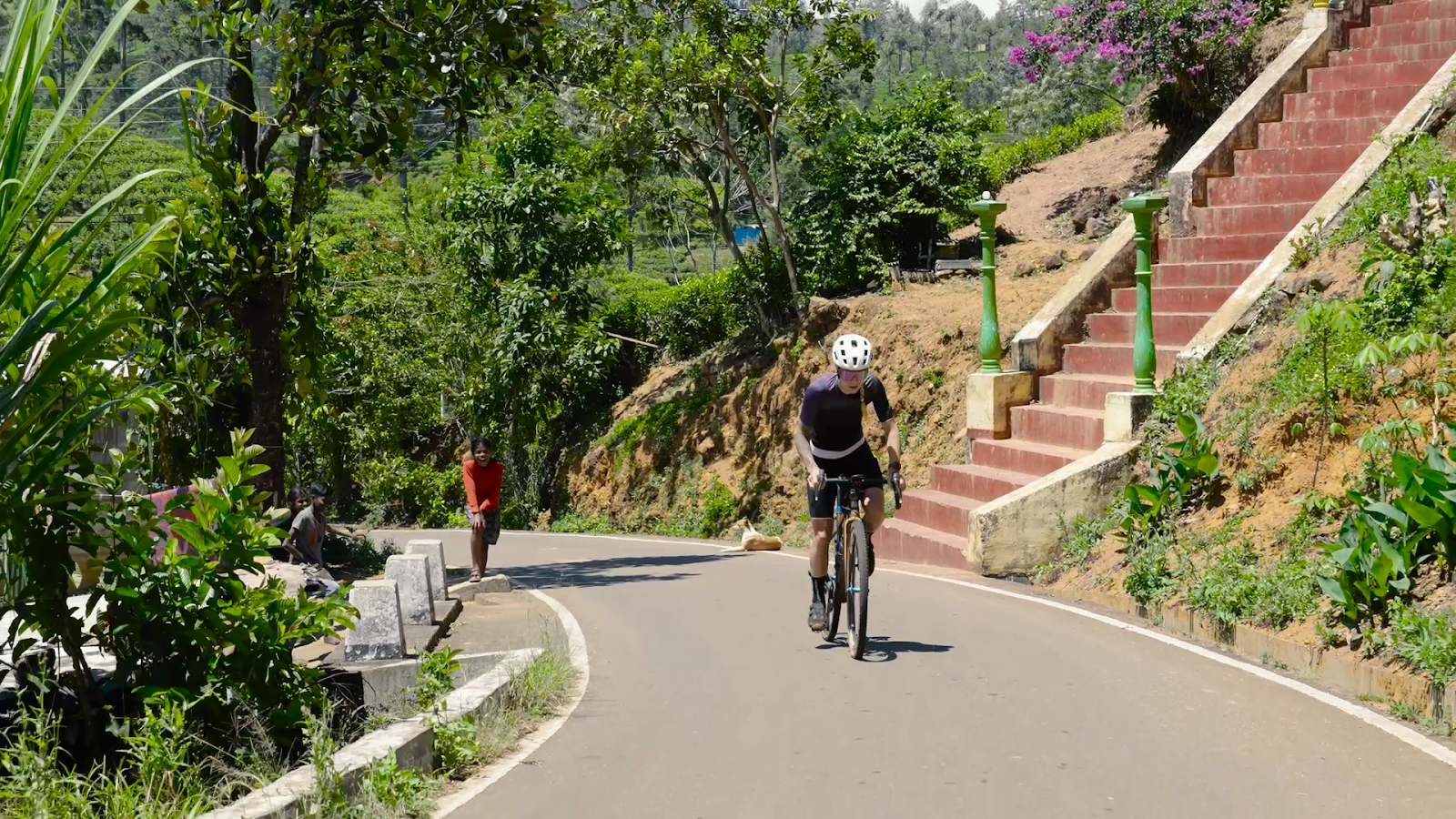
Juliet Elliott on her cycling adventure in SRI LANKA | ROUVY PODCAST EP. 1From tropical gravel rides to monkey mayhem: ROUVY ambassador Juliet Elliott kicks off the ROUVY Unchained podcast with an unforgettable Sri Lankan cycling adventure. In Episode 1, she reveals the wild beauty, cultural surprises and behind-the-scenes stories that made this journey – and the new ROUVY virtual routes – so extraordinary. Listen now.
Lauren Wolff · 12/15/2025
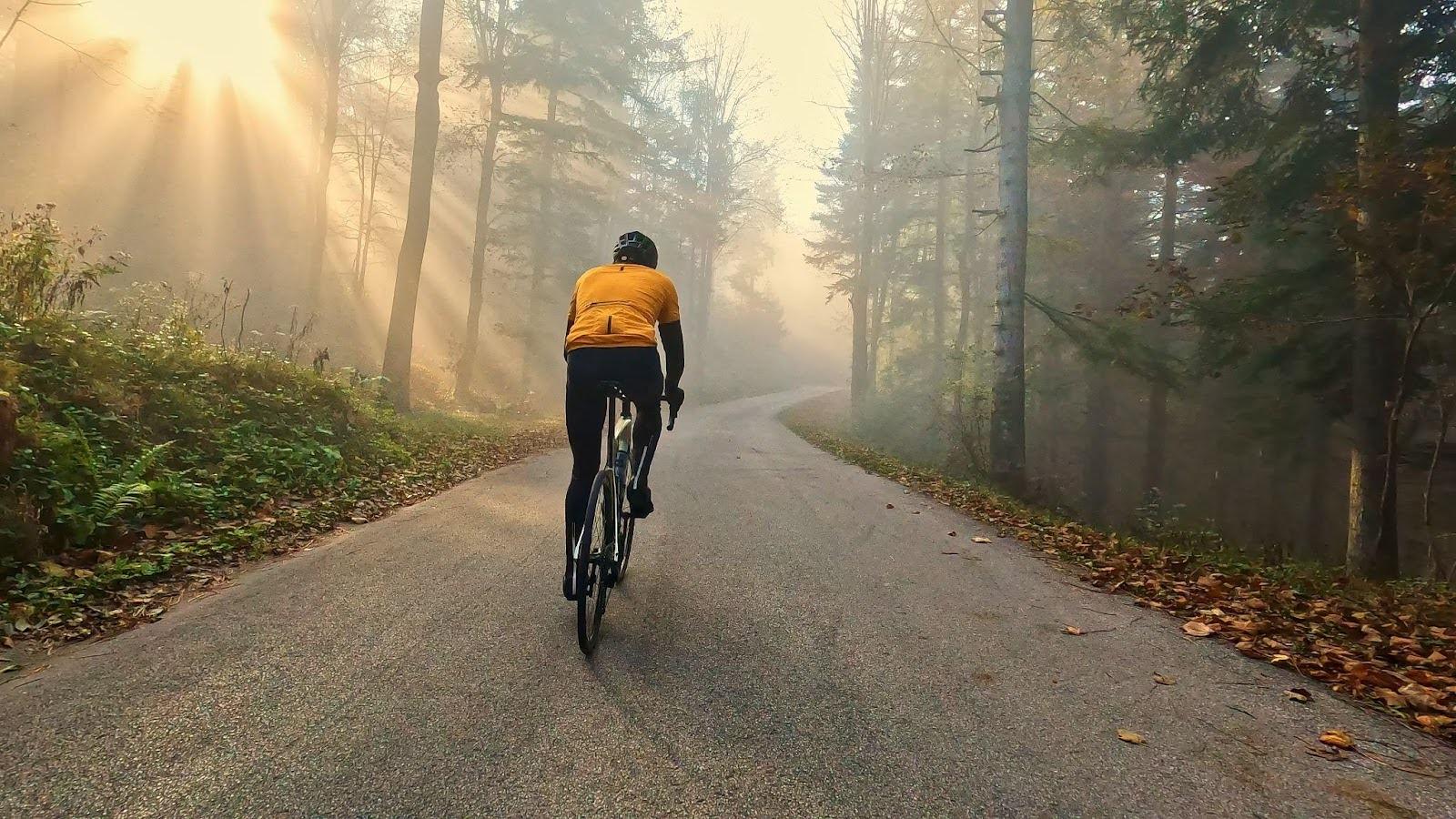
Festive 500: Easy tips to ride (or skip) the holiday challengeThe Festive 500 is a popular holiday cycling challenge, but it’s not for everyone. Here’s a simple, stress-free look at how to ride it smartly - or why skipping it can be just as rewarding.
Mark Nessmith · 1/6/2026
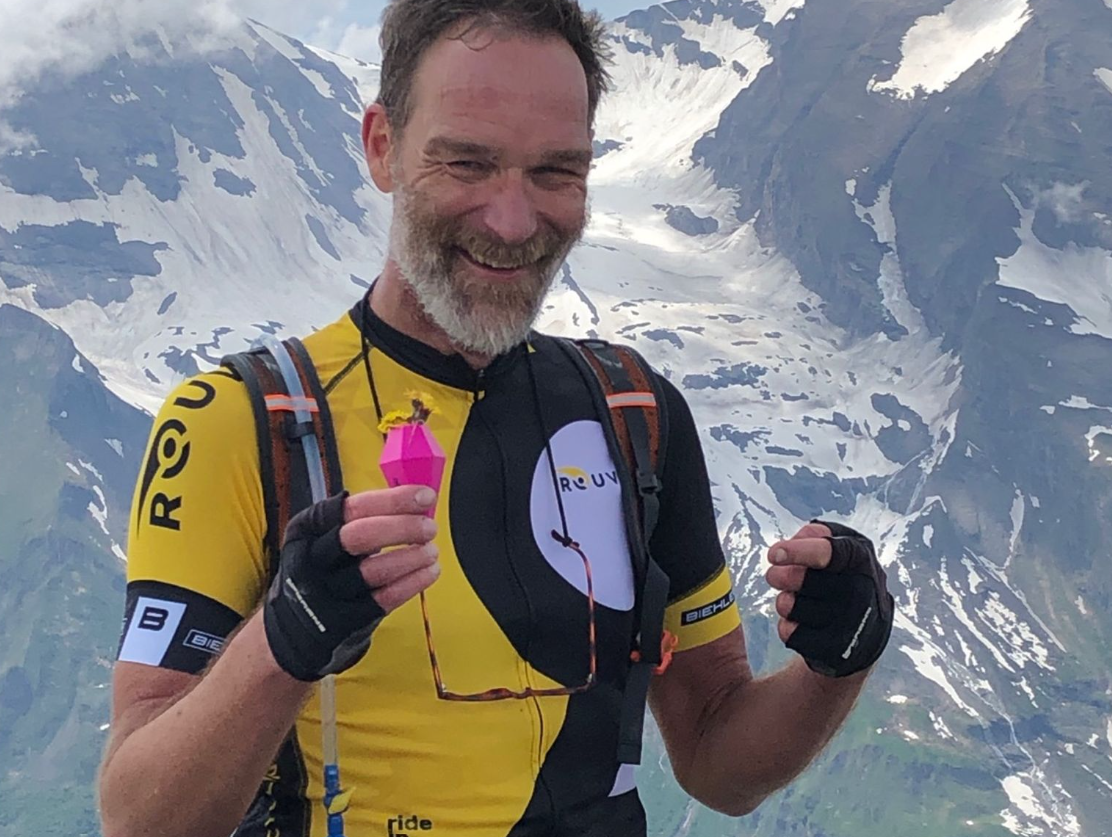
Matthias Heil on ultra endurance rides & what keeps him going | ROUVY podcast EP. 4How do you ride 600+ kilometres in an indoor race and still laugh when you lose by less than a 10th of a mile? In this latest episode of ROUVY Unchained, Matthias Heil – a mathematics professor and hardcore ultra-distance cyclist – unpacks the mindset, routines and quirks behind his epic endurance feats.
Lauren Wolff · 1/21/2026
Cycling in US National Parks: Everglades, Acadia, Zion & Grand Teton on ROUVYYou know that feeling when you click start on a ROUVY route, and you’re instantly transported somewhere else? It’s a bit like packing a bag without the travel costs and long flight. When those destinations are US national parks, you’ll get the wide expanse, terrain that draws you in, and scenery that keeps you immersed in the views.
Mark Nessmith · 2/4/2026
RAPHAEL RAYMUNDO ON GIRONA, CYCLING’S CAPITAL CITY | ROUVY PODCAST EP. 6In the latest episode of the ROUVY Unchained podcast, Raphael Raymundo shares why the Spanish city of Girona has become a true mecca for road riders, gravel grinders and pro teams alike. Listen now.
Lauren Wolff · 3/18/2026
10 best beginner cycling routes on ROUVY for easy indoor ridesStarting indoor cycling is easier with the right terrain. Discover 10 beginner routes on ROUVY featuring flat profiles, gentle gradients, and scenic real-world roads - ideal for steady aerobic rides, easy days, and building endurance from the ground up.
Lauren Wolff · 4/16/2026
Cycling the Azores: Routes Across Flores, Pico and FaialCycling in the Azores means riding through volcanic terrain, coastal roads and quiet inland landscapes that change quickly from one section to the next.
Lauren Wolff · 11/13/2025
Biggest & Most Famous Cycling Races: Types, Lengths & ROUVY Routes You Can RideExplore the world’s most iconic cycling races - from the cobbles of Roubaix to the climbs of the Tour de France - and ride their legendary routes virtually on ROUVY for authentic challenge and inspiration.
Lauren Wolff · 8/14/2025
Experience La Vuelta 2025 virtually on ROUVYRide the legendary climbs of La Vuelta 2025 from home with ROUVY’s realistic video routes. Experience the heat, drama and stunning scenery of Spain’s Grand Tour on your indoor trainer, from iconic mountain finishes to scenic Pyrenean ascents - all while riding alongside a global community of cyclists.
Unser Produkt
Fahre mit uns auf ROUVY
Unser Unternehmen
Der ROUVY Blog
Copyright ©2026, VirtualTraining s.r.o. Alle Rechte vorbehalten.