Smartwatches in 2026 act as a training partner, a private coach, and a direct line to your favourite virtual riding worlds.
Today’s best triathlon watches:
- record every swim stroke,
- mark every climb with reliable GPS tracking,
- keep an eye on sleep quality,
- and even measure training load so you know when to push and when to rest.
In 2026, several key upgrades have become standard across the industry:
- Dual-band (multi-band) GPS is now common in mid- to high-range watches, improving accuracy in cities, forests, and mountainous terrain.
- Bright AMOLED displays are no longer limited to flagship devices,
- and full GPS battery life of 30 to 40 hours has become typical rather than exceptional.
- More brands now compete seriously with Garmin, giving athletes stronger options across different price points.
In this guide I’ll explain what makes a great triathlon smartwatch, share practical advice on how to choose one that fits your budget and goals, and review the models that I loved and that impressed me most in 2026.
WHAT MAKES A GREAT TRIATHLON WATCH?
First, a watch must handle the unique demands of swim-bike-run. A true multisport watch offers a dedicated triathlon mode that lets you tap one button in transition and move straight from open-water swimming to cycling, then on to running, without fumbling through menus.
Reliable GPS tracking is critical, and multi-band chips now lock on to satellites from different constellations so your route stays accurate even under tree cover or between tall buildings.
A long battery life is just as important; in 2026 I now look for at least 30 hours in full-power GPS mode, since that has become the new standard for serious multisport watches. Many premium models extend well beyond 40 hours, and ultra-endurance modes can push past 50 hours. That margin ensures an Ironman finish never turns into a blank file.
Good optical heart-rate sensors have improved, yet pairing a chest strap still offers the cleanest data for high-intensity sets. Additionally, a great triathlon smartwatch should have various functions such as tracking, navigation, and coaching to cater to athletes’ needs.
Beyond the basics, recent years brought several welcome upgrades. Many brands moved to bright AMOLED displays that remain readable in summer sun without draining the battery as quickly as early colour screens. Solar charging rings on Garmin’s fenix range and the Enduro line stretch runtime by sipping daylight during long training camps. Some watches now include LTE support and fully integrated onboard maps so you can navigate new routes or send emergency alerts without carrying a phone.
Maps and navigation have become increasingly relevant in 2026. On-device topo maps, breadcrumb trails, and turn-by-turn routing are now common in higher-end models, making them especially useful for long outdoor rides, unfamiliar race venues, and structured route-based sessions.
The importance of activity profiles for different sports like triathlon, swimming, and cycling cannot be overstated, as they enhance the functionality and appeal of the devices for training and performance analysis. Moreover, stress tracking has become a valuable feature for overall wellness and training planning, helping users understand their overall health and optimize their training sessions.
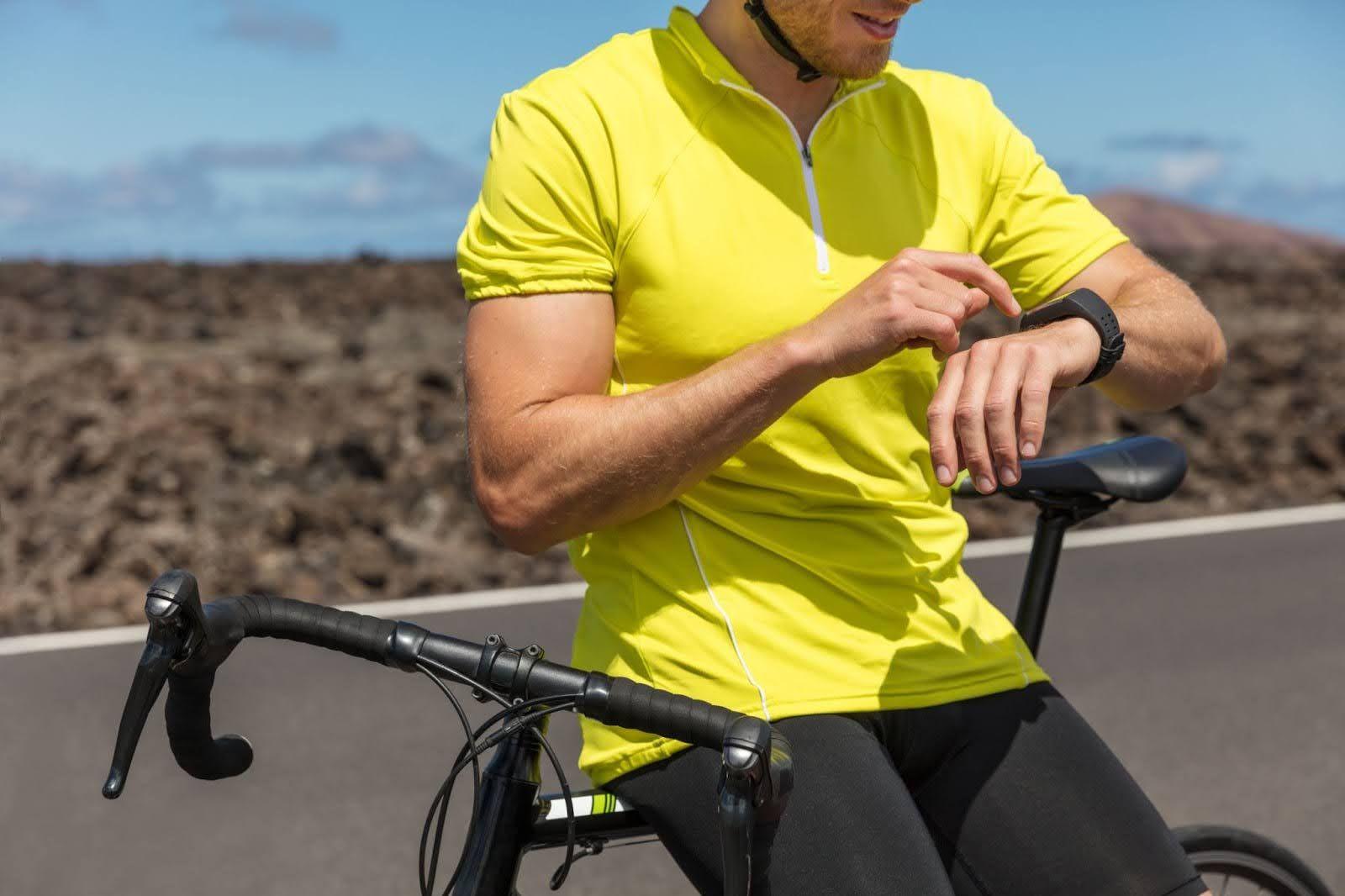
HOW TO CHOOSE THE BEST TRIATHLON SMARTWATCH FOR YOU
Start with your budget. A capable entry-level multisport watch costs around €350, while a flagship model loaded with music storage, solar charging, and topo maps can climb past €1 000. Decide early how much you want to spend so marketing hype stays in check.
Match battery life to your goal race. A watch that lasts thirty hours in GPS mode is now common across many mid-range models, while premium devices may reach 40 hours or more. Ultra-distance athletes should pay attention to endurance modes that extend well beyond that. If you focus on sprint triathlons, carrying extra battery weight might still be pointless.
Comfort deserves more attention than spec sheets usually give it. Large cases such as the Fenix 8 or Suunto Race feel solid on a bare wrist, yet they often catch on a wetsuit sleeve. Some watches might feel bulky, affecting comfort and usability, especially during athletic activities. Slimmer options like the Garmin Forerunner 965 or Polar Vantage M3 sit lower and disappear under neoprene.
Accuracy also matters, but remember that raw sensor quality only tells part of the story. Even the best optical heart-rate sensor can drift in choppy water, and multi-band GPS can still suffer if you ride next to a tall cliff. Look specifically for dual-band GPS support in 2026, as it has become a key accuracy standard. Consider how the watch’s software cleans and interprets those signals to determine physiological metrics and performance.
Finally, think about ecosystem fit. If most of your friends use Garmin Connect, jumping into group workouts feels smoother when you own a Garmin. Apple Watch owners live inside Apple Health and may need a bridge app, such as HeartCast, to share live heart-rate data with ROUVY. Make sure your watch supports Bluetooth and ANT+ sensors if you rely on power meters, heart-rate straps, or smart trainers. Pick the platform that makes syncing effortless and you will spend more time training and less time troubleshooting. Selecting a watch that meets the specific needs of triathletes can significantly enhance performance and training experiences.
Mistakes are easy to make. Many athletes buy on raw specifications alone and never use half the features they paid for. Others forget resale value; a watch with a hefty price tag can hold that value longer if the brand promises years of firmware support. Plan ahead so you don’t feel forced to upgrade every season.
THE BEST TRIATHLON WATCHES OF 2026 REVIEWED
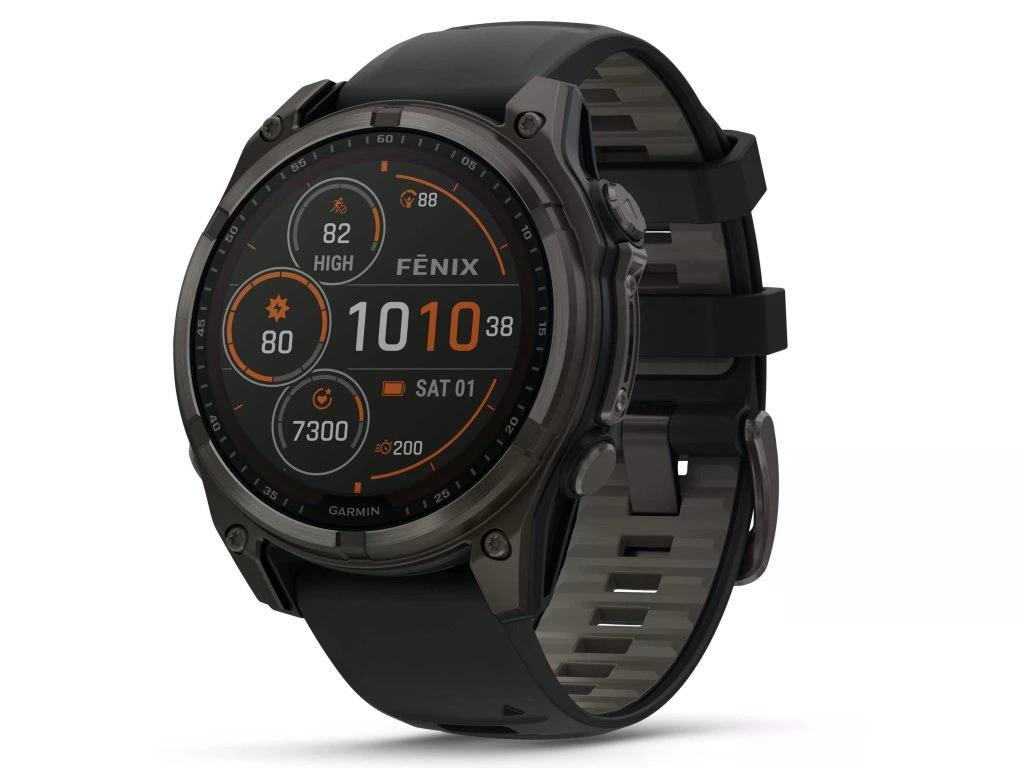
1) GARMIN FENIX 8
A DO-EVERYTHING POWERHOUSE WITH GARMIN PAY
Garmin took the already capable fenix line and added a dazzling AMOLED screen, voice commands, solar charging, and dual-frequency multi-band GPS. In everyday smartwatch mode it runs for about twenty-two days, while full GPS tracking now typically ranges between 50 and 70 hours depending on settings and solar exposure.
That stamina comes in a case built to military standards, which means it shrugs off salt-water corrosion and accidental drops. The fenix 8 is built with tough materials to withstand rigorous activities and is tougher than its predecessors due to new materials and features that enhance its durability and battery life.
All the flagship training features are here: Training Readiness, Daily Suggested Workouts, multi-sport race predictor, and full-colour maps with on-device routing. The watch is large and expensive, but if you want one device to guide you through mountain ultras, Ironman races, and daily fitness tracking, the fenix 8 stands alone. It also syncs with ROUVY through Garmin Connect so every virtual ride appears in your training log alongside outdoor sessions.
2) GARMIN FORERUNNER 970
A NEW BENCHMARK FOR BALANCE
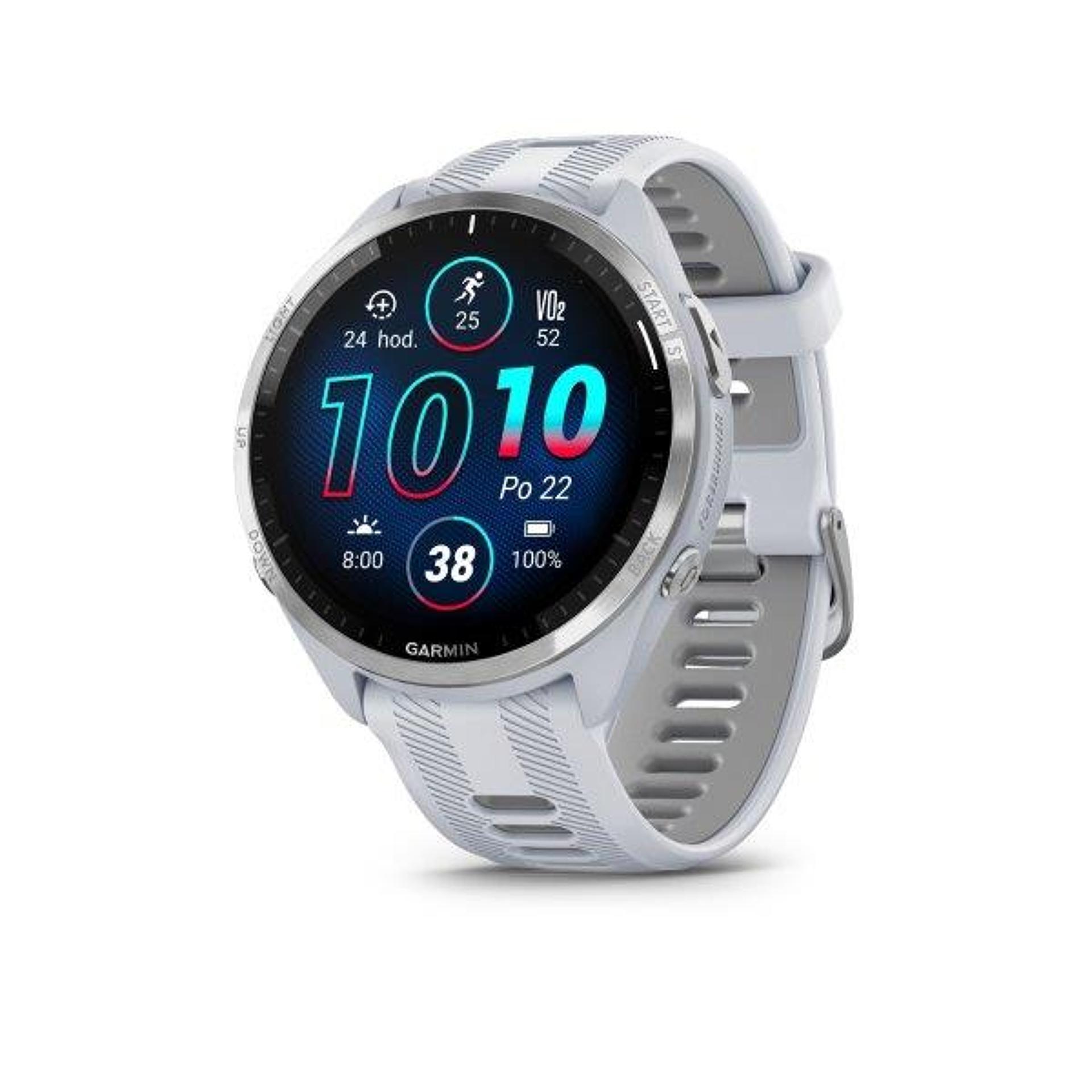
New for this cycle, the Garmin Forerunner 970 builds on the strengths of the 965 with improved battery efficiency and refined performance tools. It delivers dual-band GPS accuracy, AMOLED clarity, and strong battery life in the 30 to 40 hour range while keeping the lighter profile that race-focused athletes prefer.
For many triathletes in 2026, this model represents the sweet spot between the fenix’s full ruggedness and the Forerunner line’s lightweight performance orientation.
3) GARMIN FORERUNNER 965
LIGHTWEIGHT RACE WEAPON
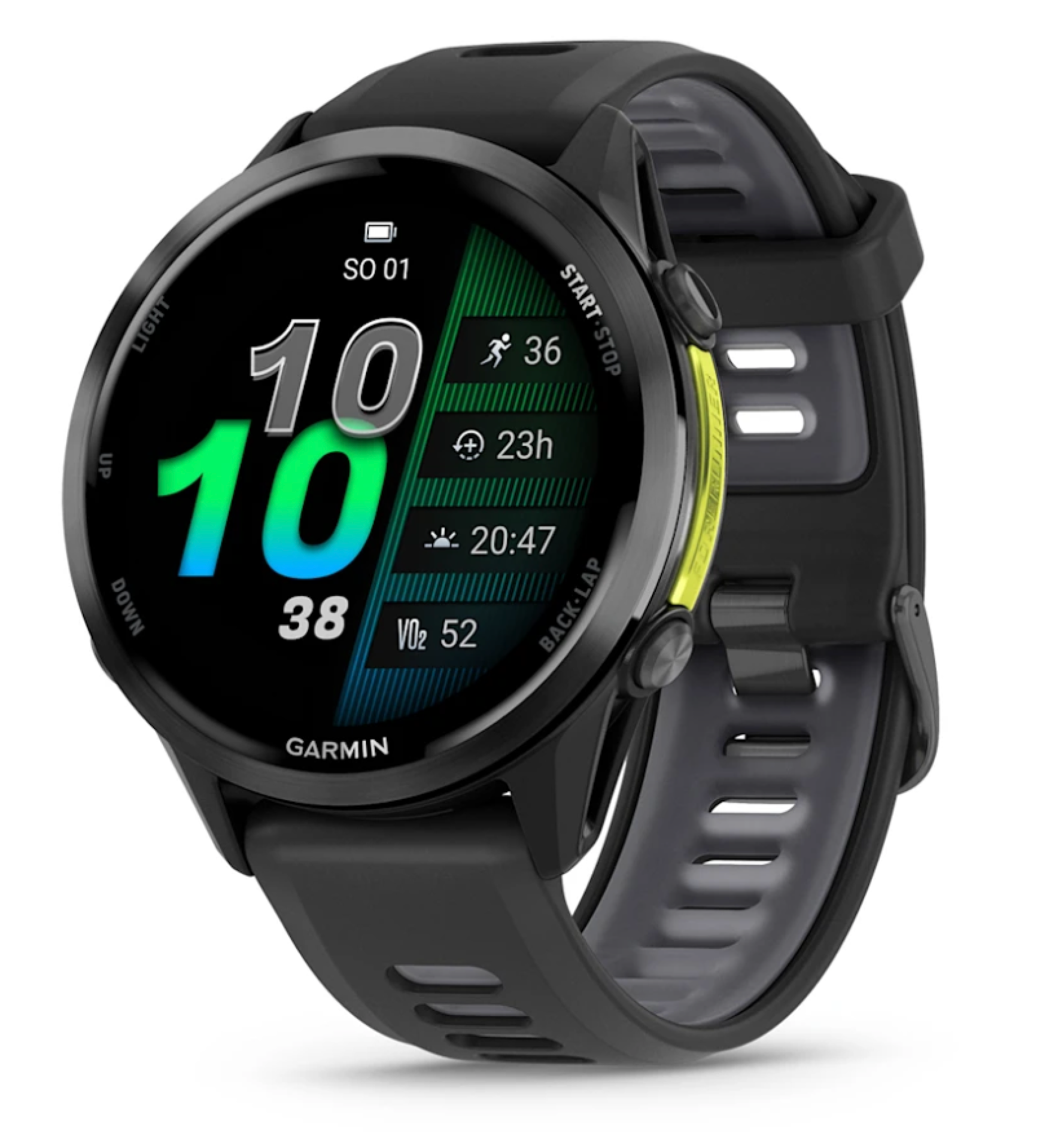
Think of the Forerunner 965 as a trimmed-down fenix that sacrifices a steel bezel for a svelte 53-gram body. The vivid AMOLED display and multi-band GPS remain, and Garmin claims roughly thirty-one hours of continuous GPS on a single charge. In practice it remains one of the most balanced options for long training weeks.
Training Readiness and detailed running dynamics match the fenix, yet the watch slides neatly under a wetsuit cuff. The battery drains more quickly if you leave the screen always on, and the price is still premium, but those trade-offs feel fair the moment you start an interval workout and see pace, power, and heart-rate metrics at a glance.
Like its big sibling, the 965 shares workouts with ROUVY automatically, and it can broadcast live heart-rate and running power to the app during a virtual brick session.
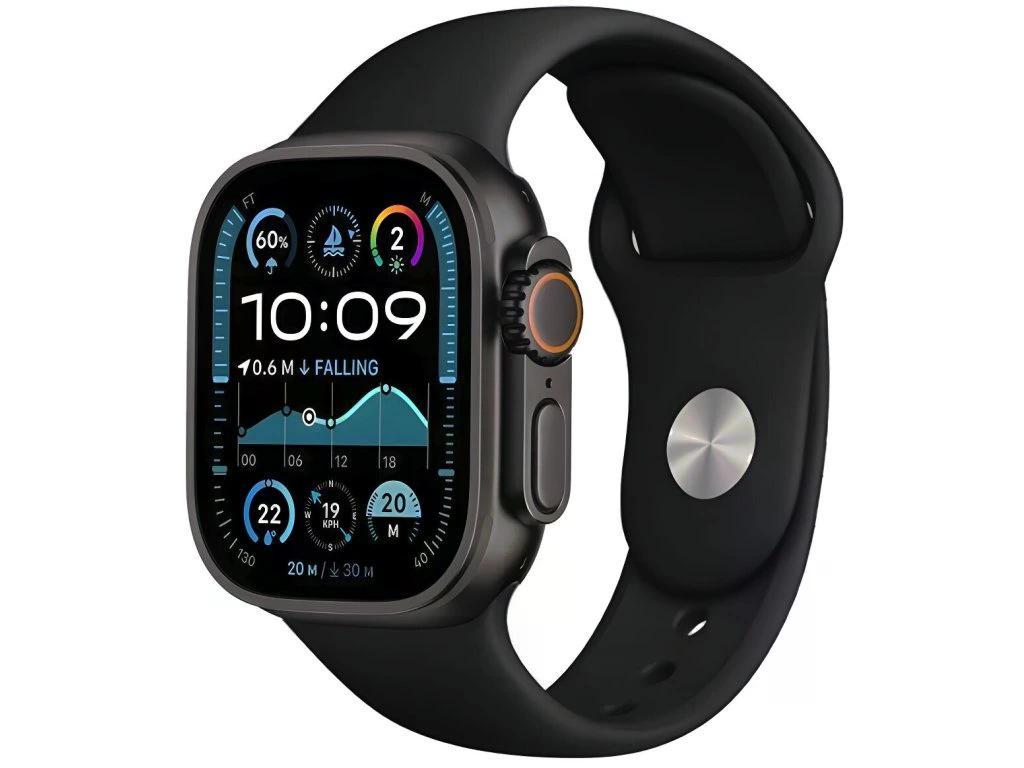
4) APPLE WATCH ULTRA 2
SMART FEATURES FIRST, SPORT FEATURES CLOSE BEHIND
Apple doubled down on adventure sports with the Ultra 2, boosting peak brightness to three thousand nits and adding precise dual-frequency GPS while maintaining a case that looks uncluttered enough for the office. Designed for adventurers and extreme sports enthusiasts, it offers robust features suitable for challenging conditions.
Battery life rises to thirty-six hours in mixed use or seventy-two hours in low-power mode. While still shorter than dedicated endurance watches, it is sufficient for sprint and Olympic-distance racing and manageable for many half-distance events.
Apple’s optical sensor remains one of the best on the market for day-to-day health tracking. ANT+ sensors are still off the table, and you need HeartCast or another bridge app to stream live data into ROUVY, yet integration with the Apple ecosystem might outweigh those gaps if you already rely on an iPhone for music, messages, and calendar alerts.
5) SUUNTO RACE
A ROBUST NON-GARMIN ALTERNATIVE
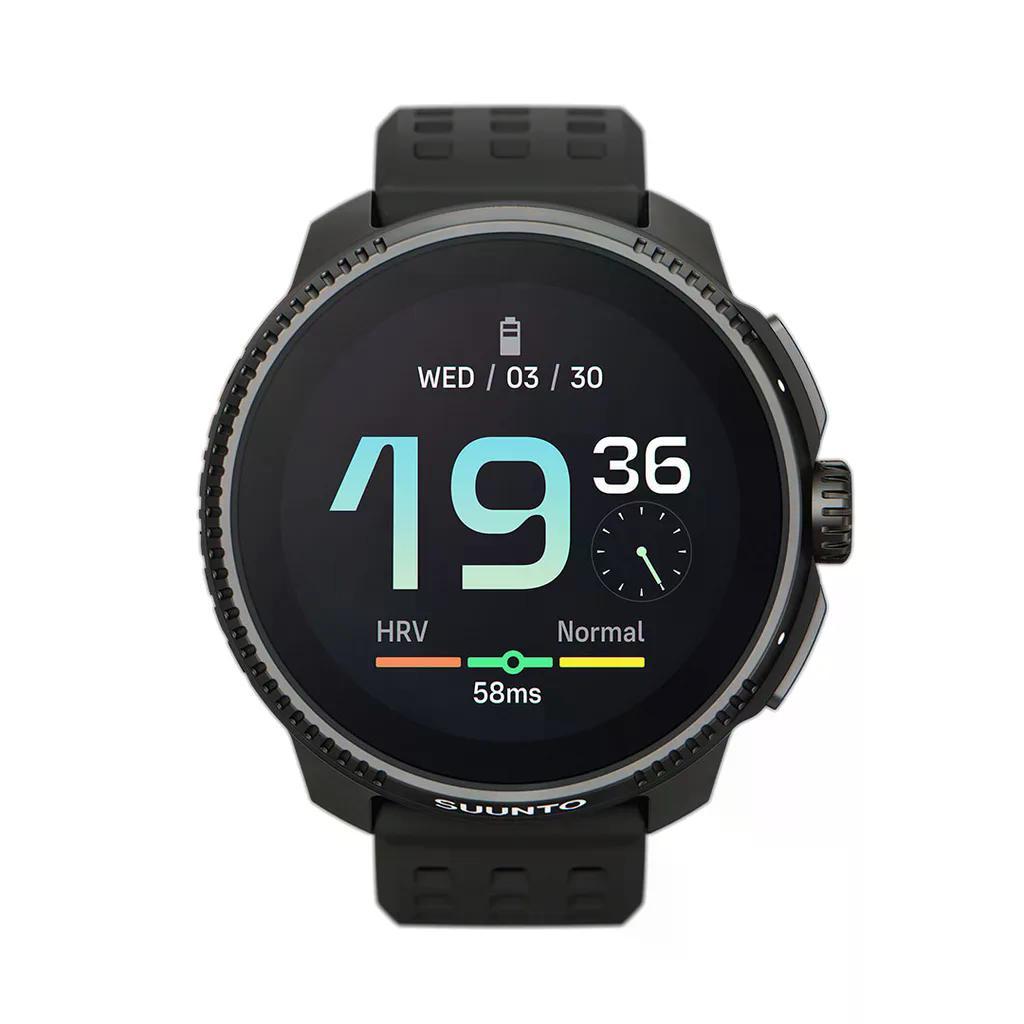
Suunto returned to its roots with the Race, offering up to forty hours in standard GPS mode and a crisp AMOLED screen ringed by a lightweight titanium bezel.
Recovery insights based on heart-rate variability guide you through heavy training blocks, and onboard maps support route navigation during long outdoor sessions. The interface stays clean, and while battery performance varies depending on display settings, it remains competitive for most race distances.
The watch strikes an appealing balance between durability and cost. It syncs rides to the Suunto App, which forwards files to ROUVY automatically, so your effort earns virtual route badges without extra taps.
6) COROS PACE PRO
THE BEST BUDGET TRIATHLON WATCH
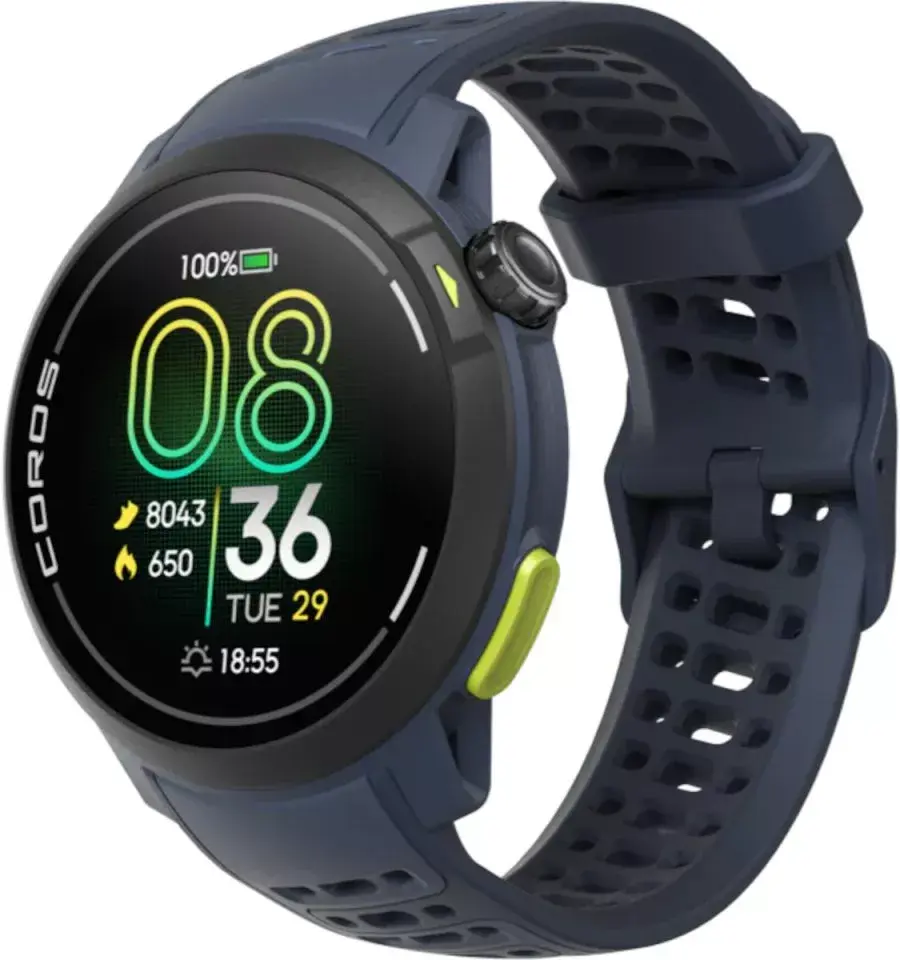
COROS carved out a loyal following by undercutting heavier brands on price while keeping training features serious, and the Pace Pro continues that trend. An AMOLED screen, roughly thirty-plus hours of single-band GPS, multi-band support, and a dedicated triathlon mode cover the essentials.
The plastic strap feels inexpensive, and battery life is average compared with COROS’s Apex line, yet the watch weighs almost nothing and costs far less than Garmin’s entry options. COROS EvoLab metrics break down training load and fatigue in a way that makes sense even if you’ve never heard of TSS.
ROUVY connectivity is direct and bidirectional, so an outdoor tempo run appears beside your indoor hill repeat session without any file juggling.
7) POLAR VANTAGE V3
RECOVERY-FOCUSED PERFORMANCE
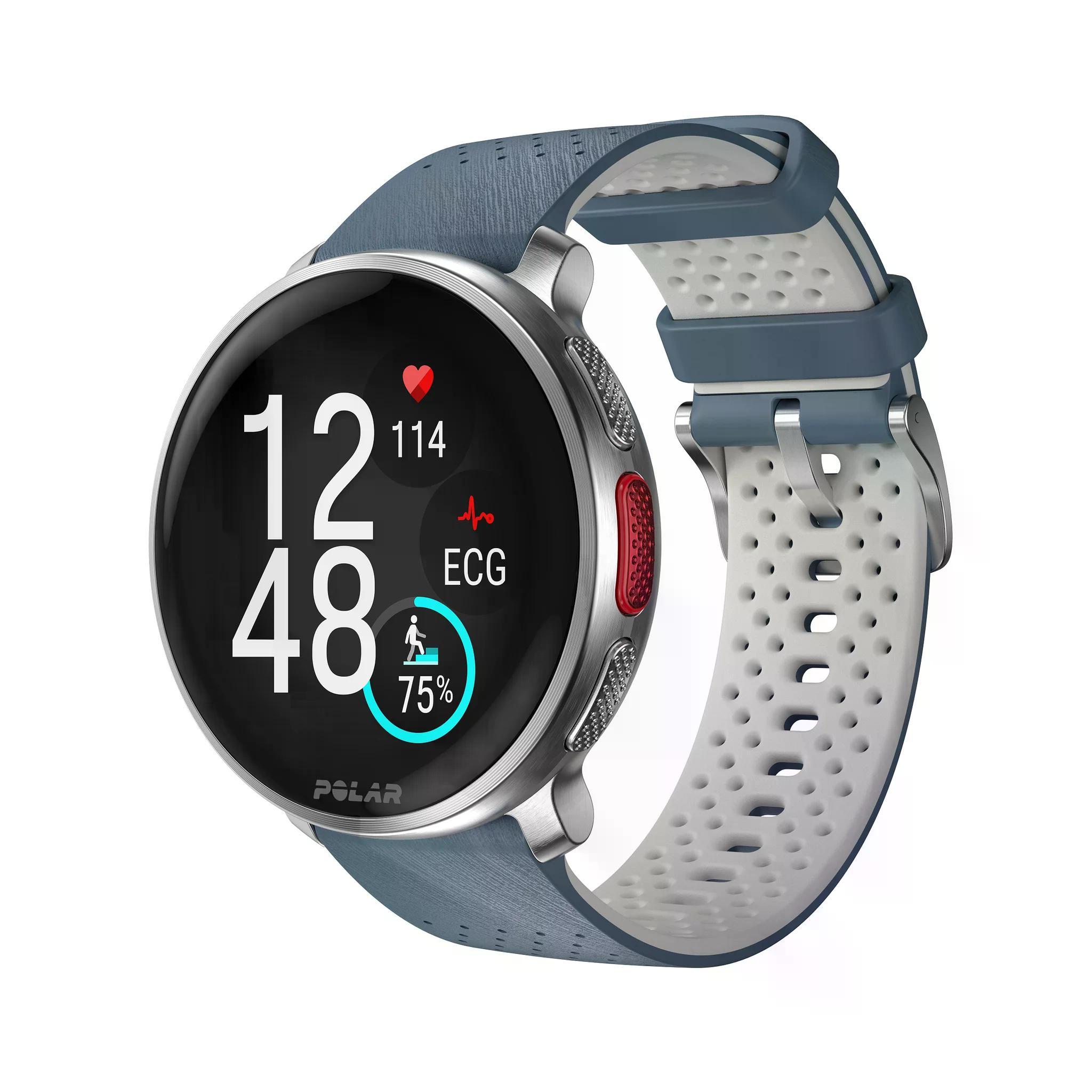
Polar continues to focus heavily on recovery, sleep tracking, and physiological insight. The Vantage V3 adds dual-band GPS, competitive battery life around 30 hours in GPS mode, and clean performance dashboards.
It may not offer the deepest mapping features, but for athletes who prioritize balancing stress and adaptation, it remains a strong contender in 2026.
ENHANCING YOUR TRAINING WITH ROUVY AND A SMARTWATCH
Marrying a smartwatch to ROUVY turns a rainy‑day turbo session into more than a time‑killer. When you pair your watch to the app, live heart‑rate streams straight from your wrist so ROUVY can adjust ERG wattage in real time. Multi‑band GPS recording lets you ride famous climbs outdoors, save the file, and then replay the exact route indoors while the app renders gradient changes. This feature is essential for tracking metrics such as time and distance on the course.
Training Load data flows back the other way, which means the fatigue score your watch uses to calculate Daily Suggested Workouts already accounts for last night’s virtual Alpe d’Huez suffer‑fest. The smartwatch also provides comprehensive training analysis, including data on aerobic and anaerobic benefits, injury prediction, and workout impact, thereby enhancing an athlete's understanding of their performance across multiple disciplines.
Garmin and COROS users simply tick Auto‑Sync inside Connected Apps. Suunto owners flip one toggle in the Suunto App. Apple Watch riders open HeartCast once, connect the broadcast in ROUVY’s sensor page, and get on the bike. The result is one continuous training history that coaches can view in their preferred dashboard while you chase career‑ladder milestones inside the virtual world.
CONCLUSION
Choosing a triathlon watch feels a lot like picking a training partner. It has to turn up when you do, stay quiet when you need to focus, and give you the nudge you sometimes avoid.