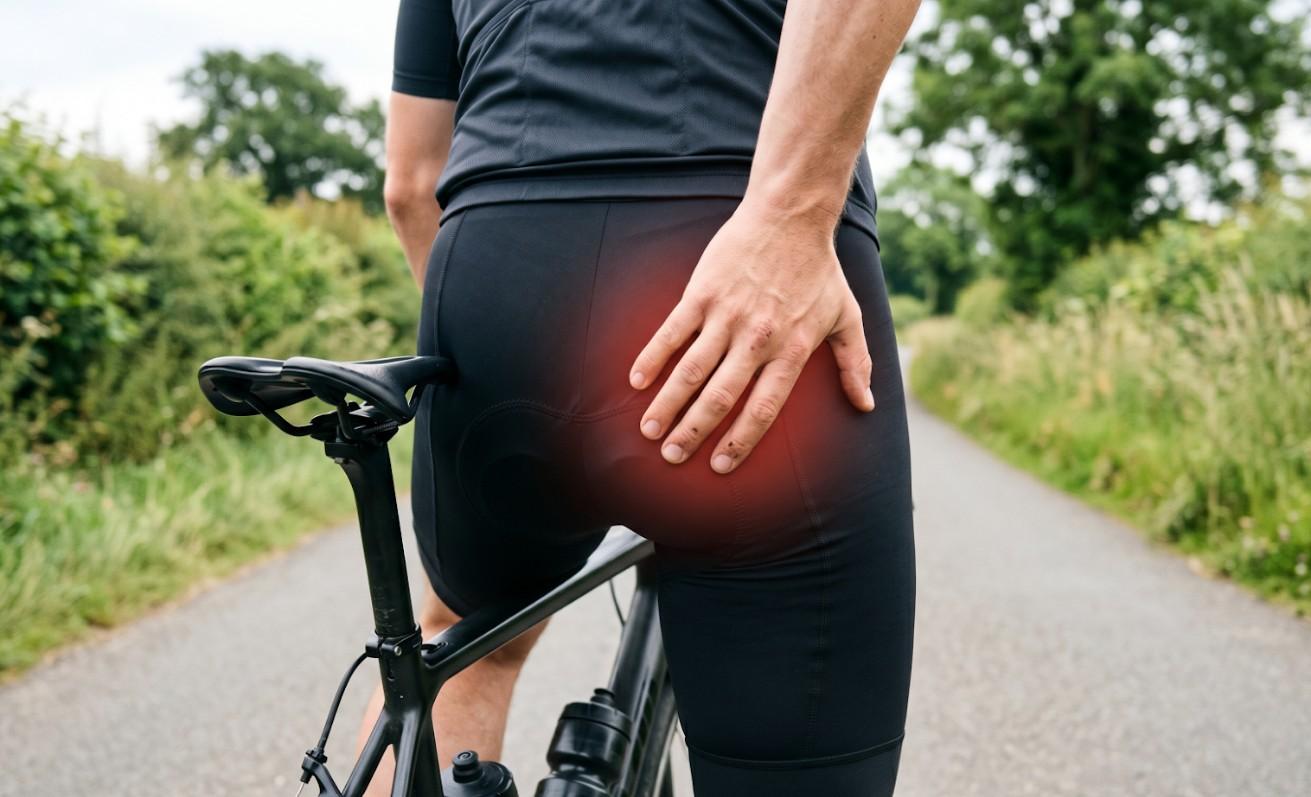
1. YOUR BODY IS STILL ADAPTING (YOU’RE NEWER TO CYCLING)
If you are a new or returning rider, having some discomfort after riding is expected, as your body is getting used to cycling.
Start with shorter rides, gradually increasing the frequency and duration. This gives your derriere time to recover and adapt.
It really helps to ride in a pair of high quality bike or bib shorts. And while it may feel like wearing a diaper the first time you try them on, you’ll be amazed at how much happier your tush is when you wear them on a ride.
2. YOU’VE GOT TRAINER BUTT
Okay, maybe I made up the term trainer butt. But my friends will laughingly agree that the pain is legit.
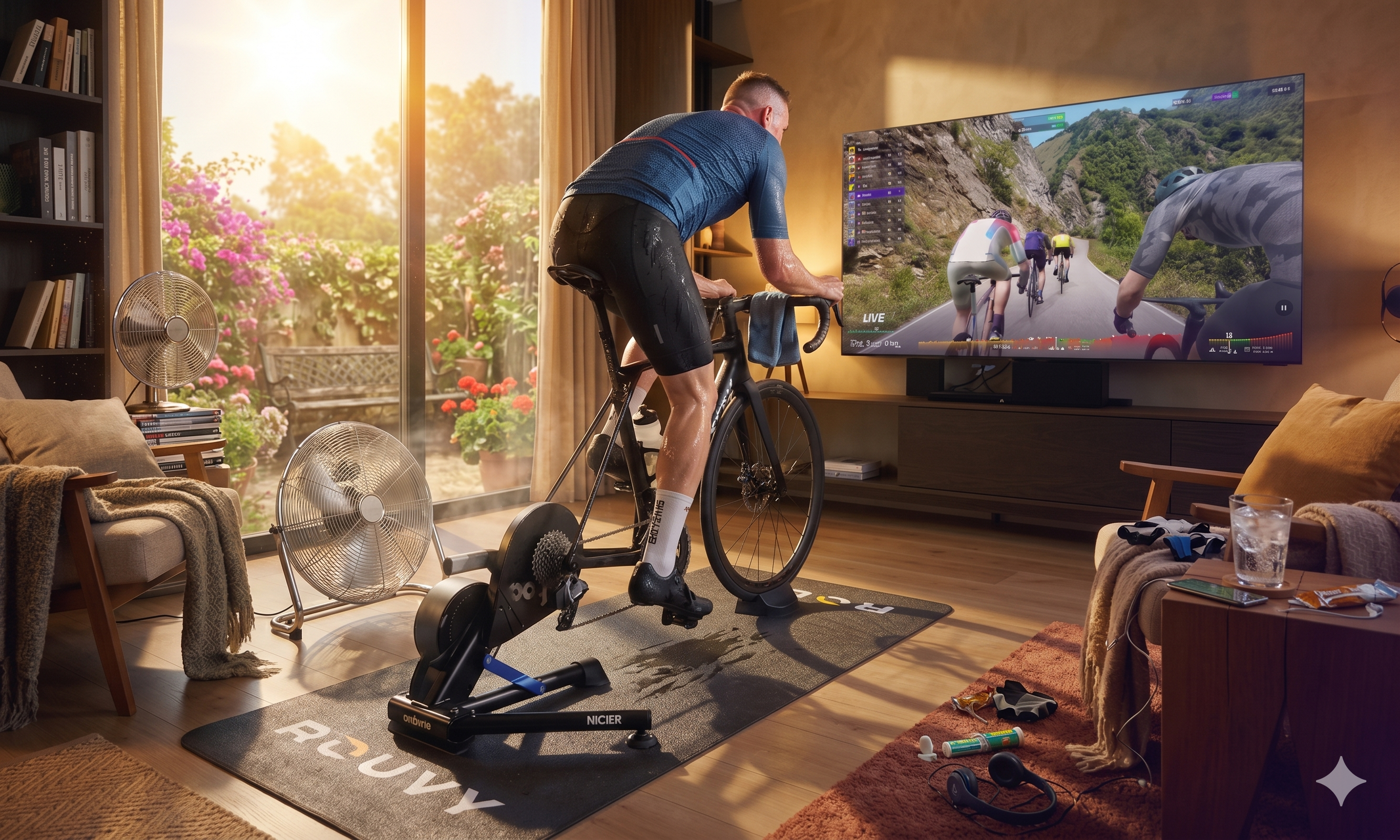
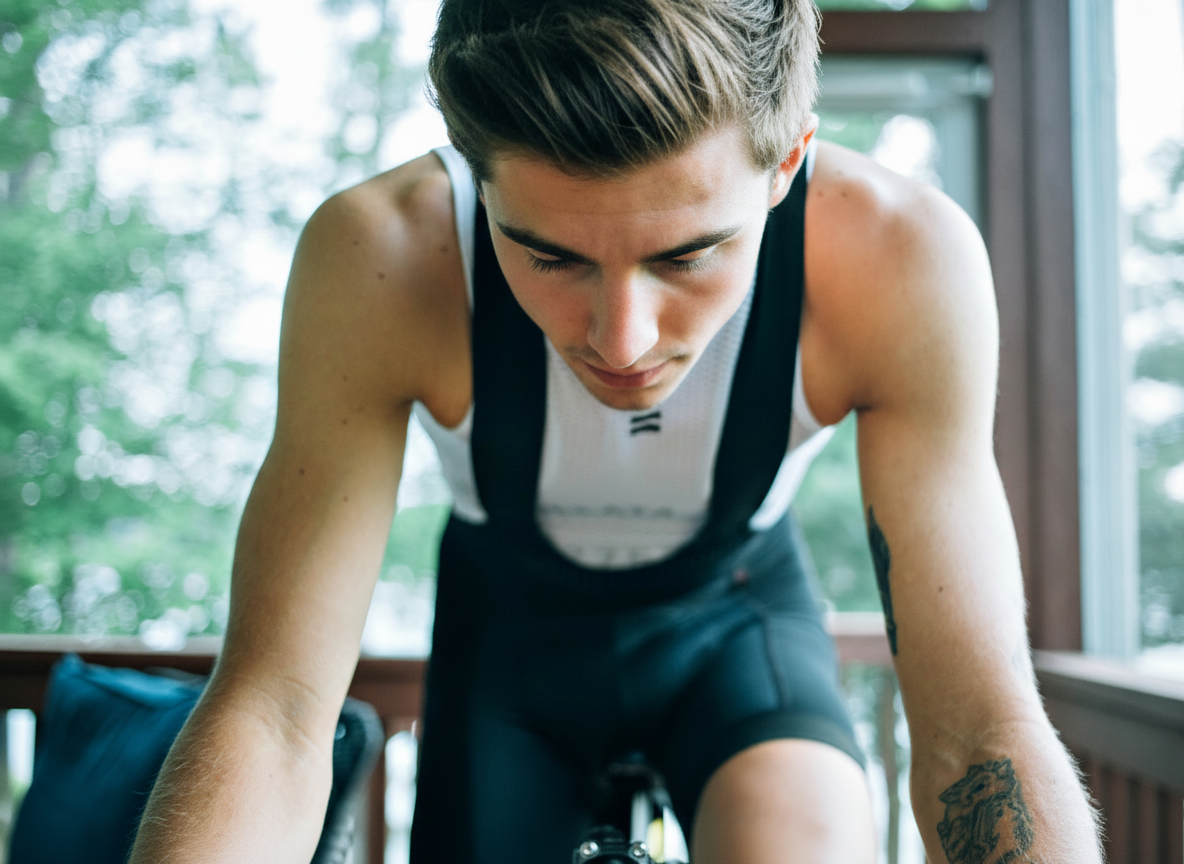
When you first ride indoors on a trainer, you may find yourself with butt and low-back pain because you aren’t moving around much on the bike compared to outdoor riding.
There’s an easy fix: Simply getting out of the saddle and standing up on the pedals from time to time should be enough to prevent the ache.

3. YOUR SADDLE IS THE WRONG SHAPE OR WIDTH FOR YOU
Your "sit bones" (ischial tuberosities) are the parts of your pelvis designed to bear your weight while sitting.
If your saddle is too narrow, these bones hang over the edges, dumping your weight onto sensitive soft tissue.
If it’s too wide, it causes inner-thigh chafing and restricts pedaling.
Notably, sit bone width is based on skeletal structure, not body weight, which is why women often require wider saddles.
THE AT-HOME MEASUREMENT TEST:
- Sit on a piece of corrugated cardboard placed on a hard, flat surface.
- Stand up and locate the two deepest indentations.
- Measure the distance between the centers in millimeters.
Compare this to your saddle width or visit a bike shop for a precise fitting. If you’ve changed saddles but still feel soft-tissue pressure, consider a saddle with a center cut-out to provide additional relief.
TIP: For saddle recommendations and more advice on choosing the right one, see our guide to the best bike saddles.
4. YOUR SADDLE HEIGHT IS OF
As a newbie, I thought I needed to be able to sit on my bike seat and put both feet flat on the ground. But this low setup sent my knees into my chin and meant I had no strength to pedal.
If your saddle is too high, your hips will rock as you strain to reach the pedals at the bottom of your pedal stroke. That side to side motion will cause you to slide in your seat – creating friction that can cause chafing and saddle sores.
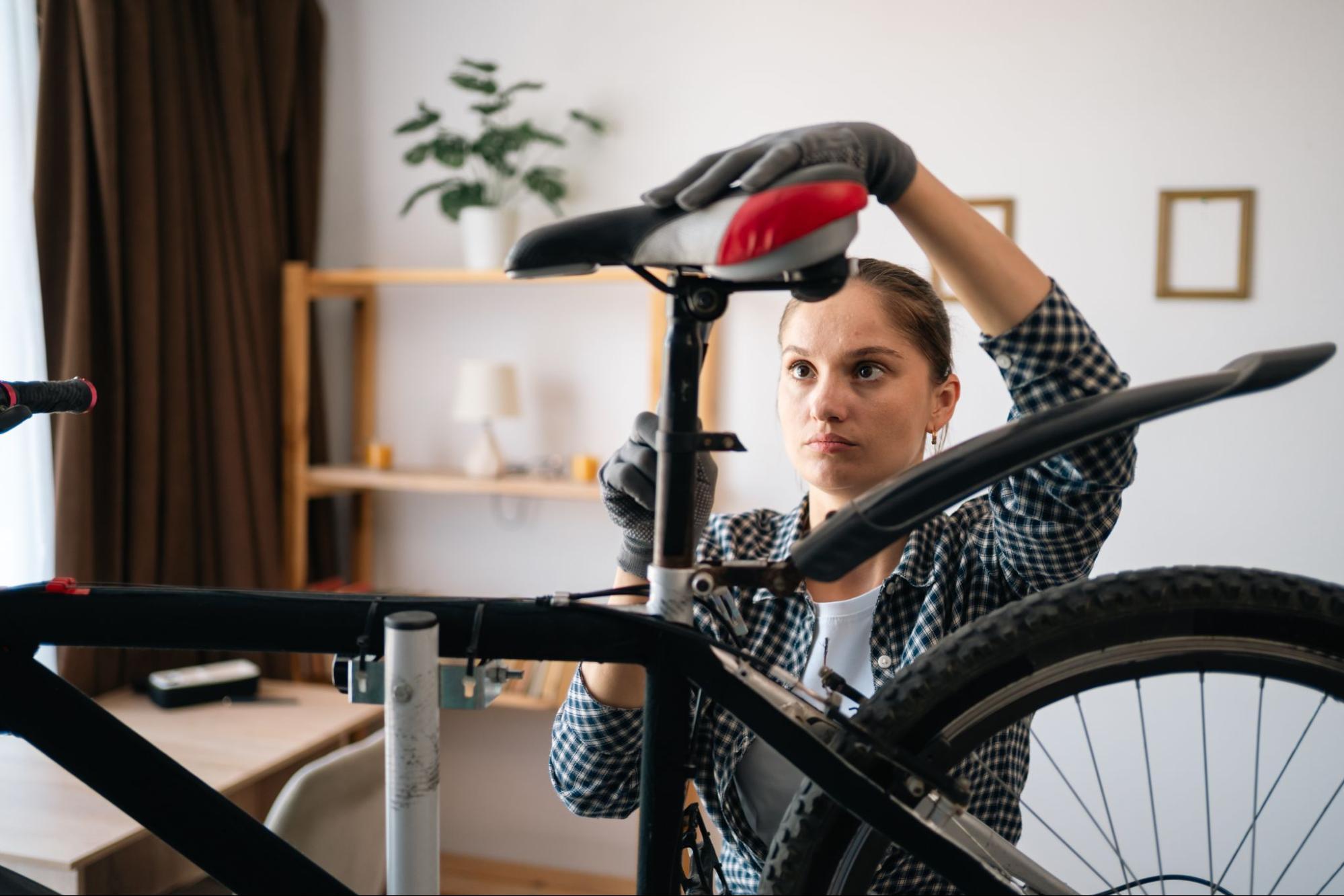
Here’s how to check your saddle height:
- Set your bike up on a trainer or lean it against a sturdy wall.
- Wear your cycling shorts, but no shoes.
- Place your bare heel on the pedal at the 6 o'clock position (the bottom of the stroke).
Your leg should be completely straight with your knee locked out, but your hips must remain perfectly level.
❌ If your knee is bent: The saddle is too low.
❌ If your heel loses contact or your hip tilts down to reach: The saddle is too high.
✅ While barefoot, try to pedal backward slowly using only your heels. If you can do this without your hips rocking side-to-side to reach the bottom, you’ve found the right height.
5. YOUR SADDLE ANGLE IS PUTTING PRESSURE IN THE WRONG PLACE
Even a 1-degree tilt can change your ride comfort. If the nose points up, it compresses sensitive soft tissue (the perineum), causing numbness. If it points too far down, you’ll slide forward, dumping painful pressure into your wrists, sit bones, and shoulders.
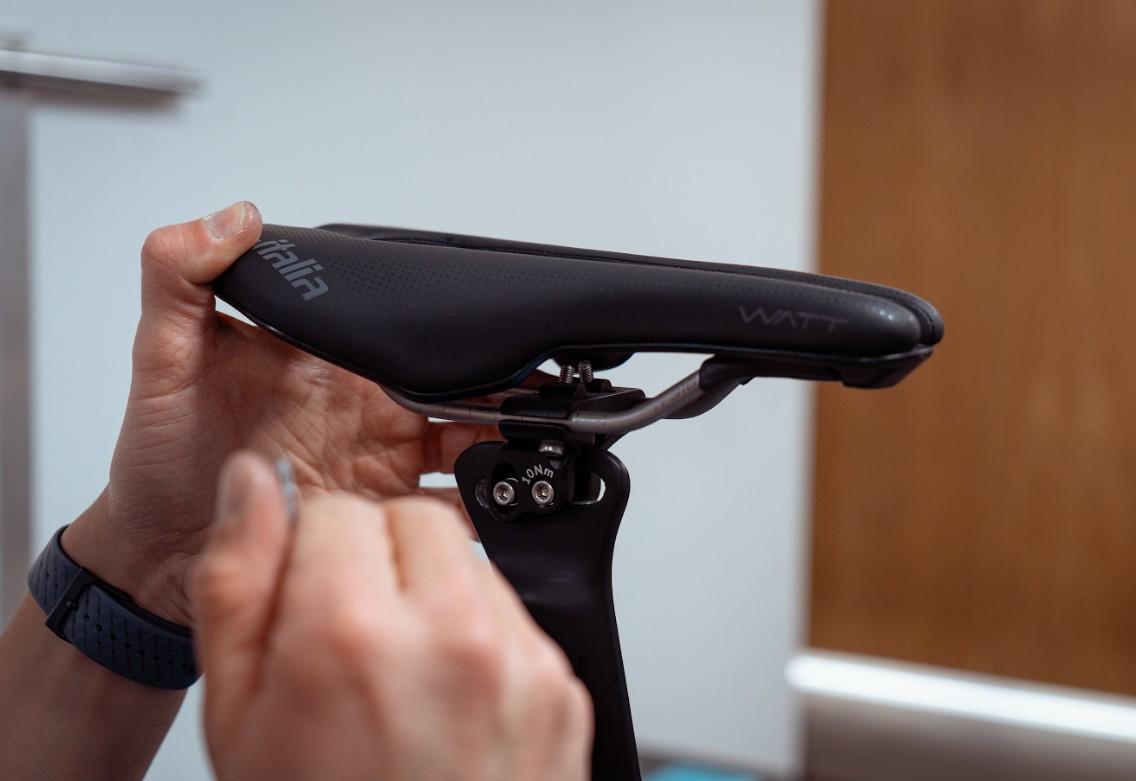
Use a level (or a smartphone app) to ensure your saddle is perfectly flat (0°). From there, you might nudge the nose down 1° if you ride in an aggressive position, but "level" is usually safest for most people.
6. YOUR BIKE FIT SHIFTS TOO MUCH WEIGHT ONTO THE SADDLE
If your bike fit is putting too much weight onto the saddle, you won’t feel stable, and you won’t be able to get enough power into your pedal stroke.
The ideal bike fit balances your weight better between the saddle, pedals and handlebars.
If your bike is too big for you, you may find you have the seat all the way down but you’re still having saddle pain.
If your handlebars are too low because the bike is too small, and you may have both soft tissue pain and hand and wrist pain. In this case, a bike fit to check for size is probably your best fix.
7. YOUR SHORTS, SEAMS, OR SWEAT ARE CAUSING FRICTION
No one wants to say this quiet part out loud, but saddle sores and chafing are some of the most embarrassing issues that can keep you off your bike. They are usually caused by friction – specifically sweaty friction.
A saddle sore looks like an out-of-control pimple on your most sensitive parts, but a little prevention goes a long way!
Consider a pair of high quality, good-fitting bike shorts. We may poke fun at the MAMILs (middle-aged men in Lycra) in our lives, but there’s a good reason we should be copying their sense of style.
Your bike shorts should fit tight enough that the chamois stays put. If they’re too big, they will slide around on your skin, and create chafing.
A good quality chamois is also designed to help absorb sweat (gross, I know). But this will protect your sensitive skin.
Lastly, consider chamois cream. Called such because it is generally applied to the chamois (but you can put it directly on your skin if you prefer), chamois cream creates a protective layer against sweat and helps the chamois stay in place, which means less friction and fewer chances of developing a saddle sore or chafing.
If your skin is mildly chaffed, you can treat it with a zinc oxide barrier cream (AKA diaper cream) to calm and protect it.
TIPS FOR TREATING SADDLE SORES
For a saddle sore, apply a warm, damp washcloth to the area for 10-15 minutes several times a day. This helps draw out the infection and encourages the pore to drain naturally.
Keep it clean and apply a thin layer of over-the-counter antibiotic ointment to prevent it from spreading.
Never try to pop or squeeze a saddle sore. This can push the bacteria deeper into the tissue and turn a minor annoyance into an abscess. See a doctor if you have fever or chills, redness streaking from the saddle sore, or intense pain that makes it hard to walk.
Remember to get out of your kit and into fresh dry clothes as soon as you can to help prevent further skin irritation.
And just in case no one was brave enough to tell you, don’t wear underwear with your cycling kit. The seams, edges and material can increase your chances of chafing and saddle sores. Just grin and “bare” it!
8. YOUR TYRE PRESSURE IS TOO HIGH
Most riders pump their tyres up to the maximum number printed on the sidewall, which makes the bike feel like it's vibrating on a jackhammer. Try dropping your tyre pressure 10 to 15 percent, and possibly more if you have tubeless tyres.
This allows your tyres to absorb road buzz and small bumps before they ever reach your sit bones.
Use an online tyre-pressure calculator (like SRAM’s or Silca’s) to find the ideal pressure for your weight.
WHEN BUTT PAIN AFTER CYCLING IS NOT NORMAL
Cycling requires a certain amount of "toughing it out," but you may be dealing with saddle sores, numbness, or another issue that should not be ignored.
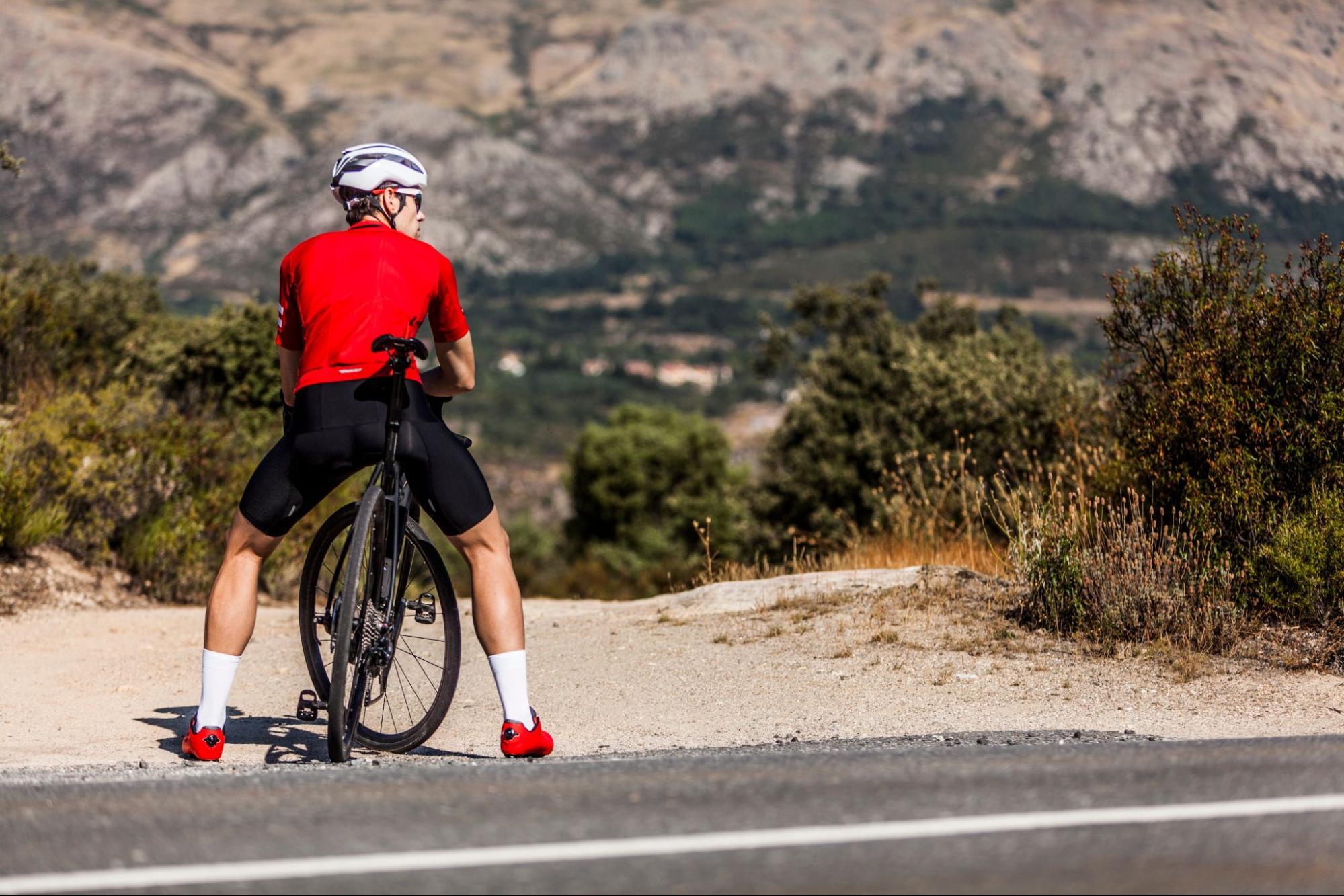
If you experience any of the following, step away from the bike and consult a professional:
NUMBNESS OR TINGLING
Numbness is a sign of nerve compression or restricted blood flow. If you feel "pins and needles" in your groin or feet, or if the numbness lasts more than a few minutes after you get off the bike, your saddle is likely at the wrong angle or height. Or it may be the wrong shape for your anatomy.
SHARP OR "ELECTRIC" SHOOTING PAIN
Normal cycling soreness is a dull ache. If you feel a sharp, stabbing or electric sensation, you are likely pinching a nerve. This is often caused by a saddle that is too high, forcing your pelvis to overstretch.
ASYMMETRICAL PAIN (ONE SIDE ONLY)
If your left sit bone feels fine but your right one is screaming, your body is compensating for an imbalance, such as a leg-length discrepancy, a misaligned cleat or leaning to the side.
SKIN BREAKS AND LUMPS
Chafing (redness) happens. But open sores, deep lumps or blisters are a sign that the friction levels are too high. If a lump feels hard, hot or "cystic," it is an infected saddle sore that needs rest and treatment.
PAIN THAT DOESN'T IMPROVE WITH REST
New-rider soreness should fade significantly within 24-48 hours. If days later it still hurts to sit on a regular kitchen chair, you have likely caused deep tissue bruising or inflammation.
If the symptoms don't clear up with rest, see a doctor or a physical therapist who specializes in cycling.
For comparison, here is what is normal:
- A dull ache on the sit bones that goes away after a day or two.
- Slight skin redness (that doesn't break the surface).
- Muscle fatigue in the glutes.
FROM PAIN TO COMFORT: DIAL IN YOUR RIDE
Ultimately, remember that a bike fit isn't a "set it and forget it" task. As a friend recently reminded me, our bodies are constantly changing – whether it's a shift in flexibility, core strength, or even just the natural passage of time.
The saddle height and reach that felt like a dream last year might need a few tweaks to stay comfortable this year.
If you find yourself dealing with new aches or persistent soreness, you don’t have to live with it.
Cycling is meant to be a source of freedom, not a test of your pain tolerance.
By listening to your body and making these small, intentional adjustments, you can stop focusing on the discomfort and get back to enjoying the ride.
RELATED READING