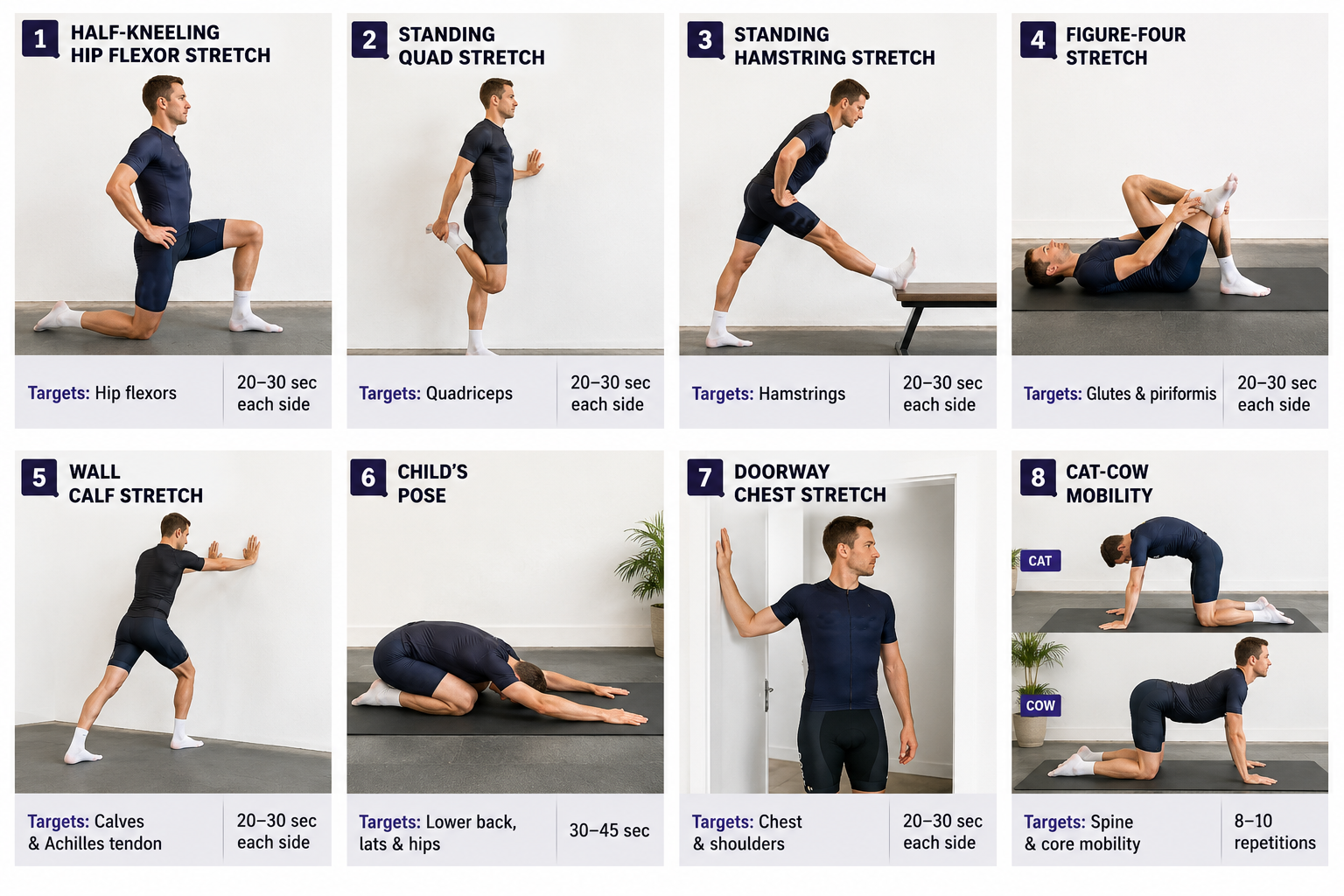
5. Wall calf stretch
Targets: Calves and Achilles tendon
Hold: 20–30 seconds each side
Place both hands against a wall and step one leg behind you. Keep your heel on the ground while gently leaning forwards until you feel the stretch through your calf.
Avoid bouncing. Slow, steady pressure is far more effective, and your calf muscles will thank you for it.
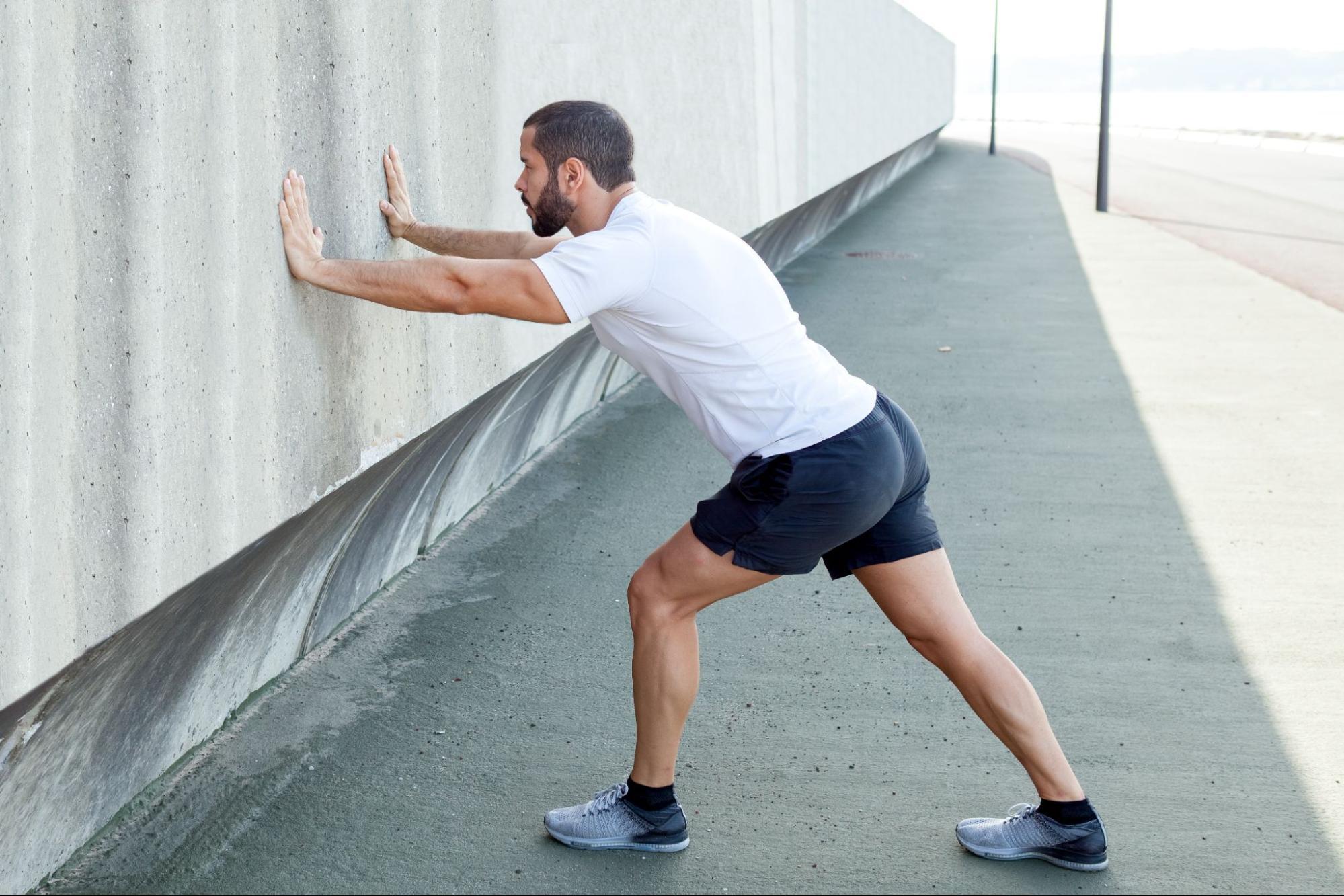
Above: Place both hands against a wall and step one leg behind you for the calf stretch.
6. Child's Pose
Targets: Lower back, lats and hips
Hold: 30–45 seconds
Sit back onto your heels and stretch your arms forwards along the floor while allowing your chest to sink gently between your shoulders.
After spending an hour or two bent over the handlebars, this stretch can feel particularly satisfying. Sometimes it's the one people look forward to most because it gives the whole back a chance to relax. One thing I've noticed over the years is that many riders don't realise how much tension they're carrying in their back until they stop riding. Child's Pose usually reminds them pretty quickly.
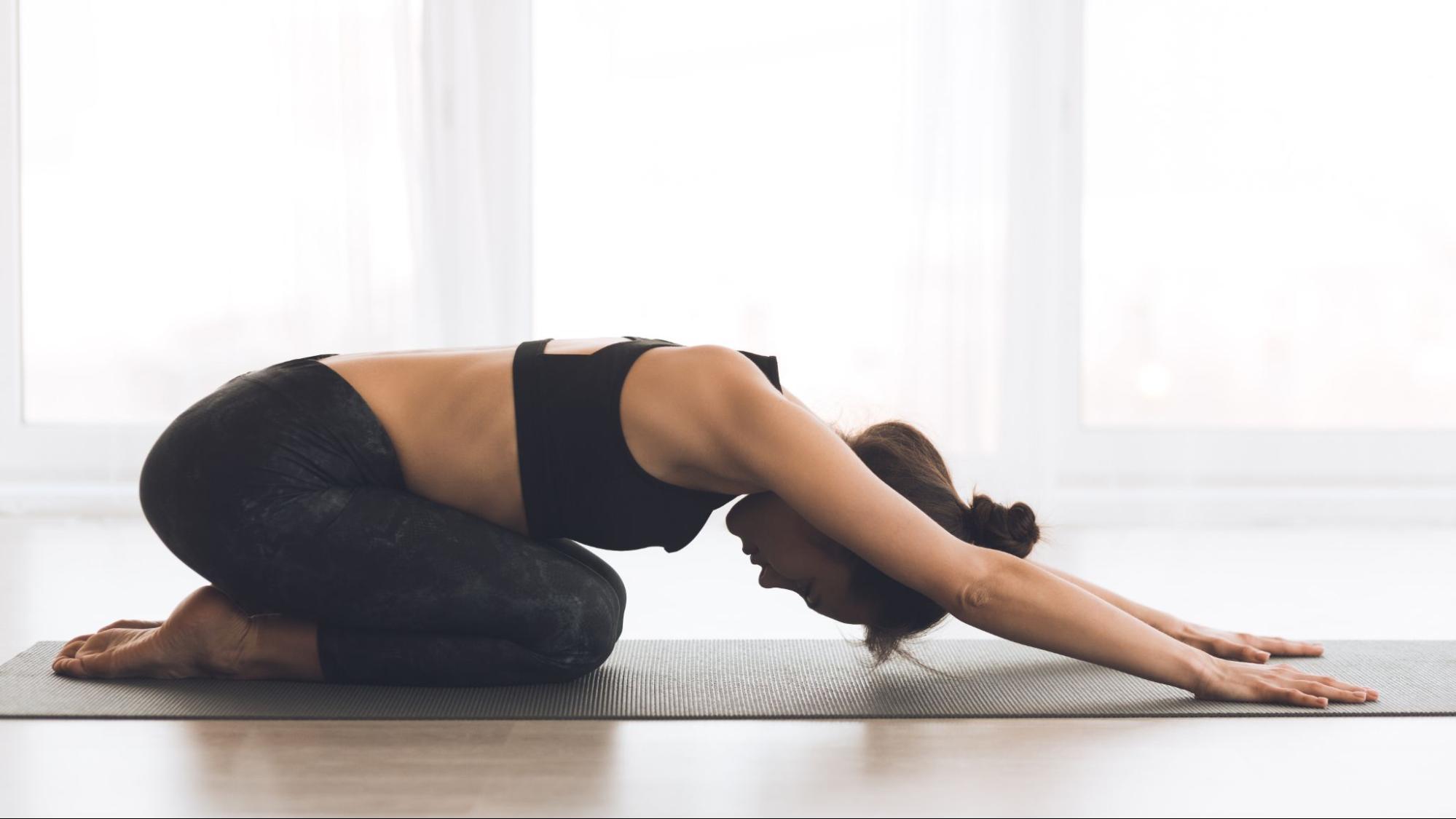
Above: Sit back onto your heels and stretch your arms forwards in the Child's Pose stretch.
7. Chest opener
Targets: Chest and shoulders
Hold: 20–30 seconds
Stand in a doorway and place your forearm against the frame with your elbow bent to roughly 90 degrees. Slowly rotate your body away until you feel a comfortable stretch across your chest and the front of your shoulder.
Cyclists naturally focus on looking after their legs, but don't neglect your upper body. Your shoulders, chest and upper back have been working quietly throughout the ride too, particularly if you've been riding into a headwind or spending time on the drops.
8. Cat-Cow mobility
Targets: Spine and lower back
Repeat: 8–10 slow repetitions
Move gently between arching and rounding your back while breathing slowly and naturally. There's no need to rush it. Think of this as pressing the reset button before you head inside for a shower, a coffee or, if you've earned it, a slice of cake.
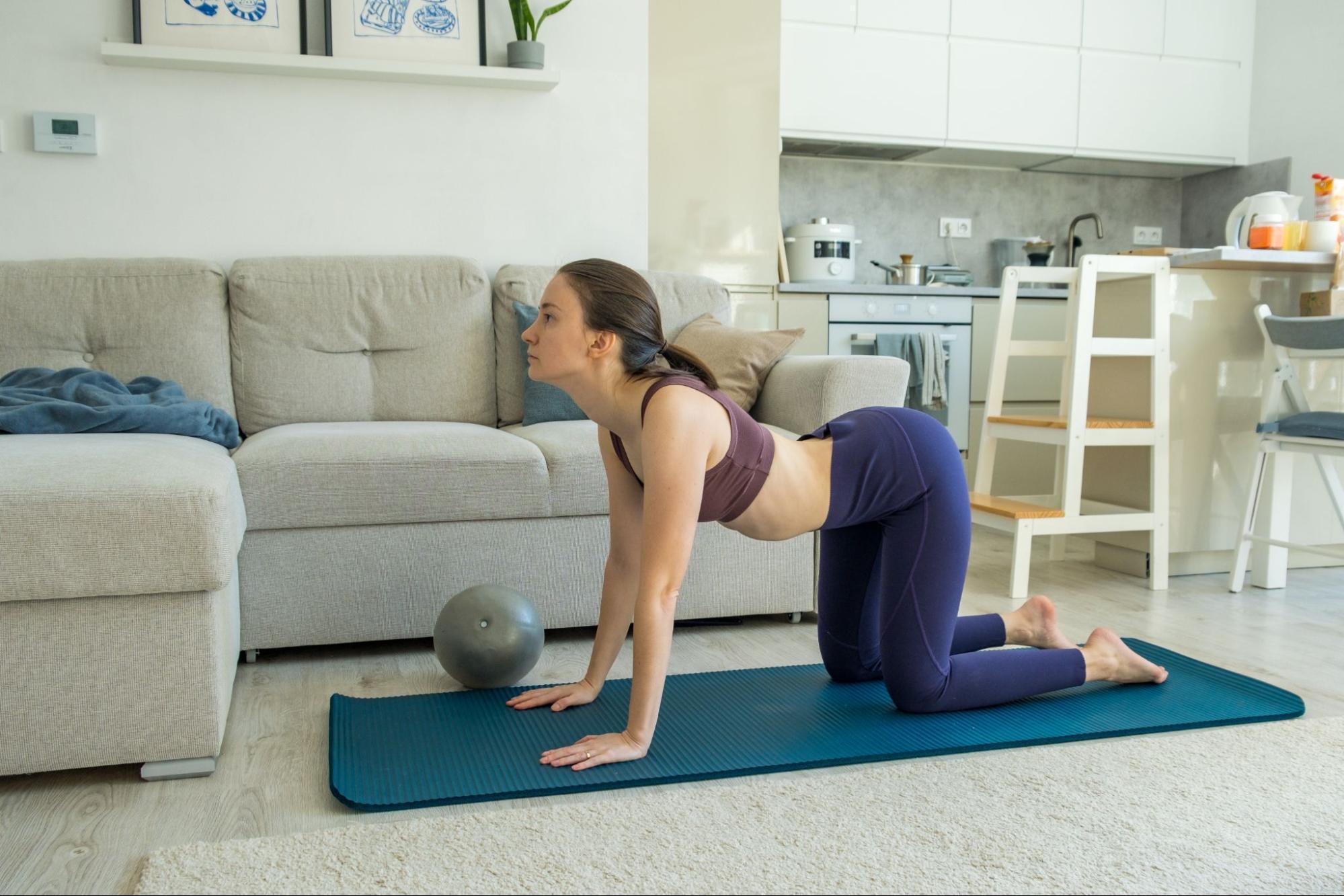
Above: Move into the Cow position by gently arching your back and lifting your chest.
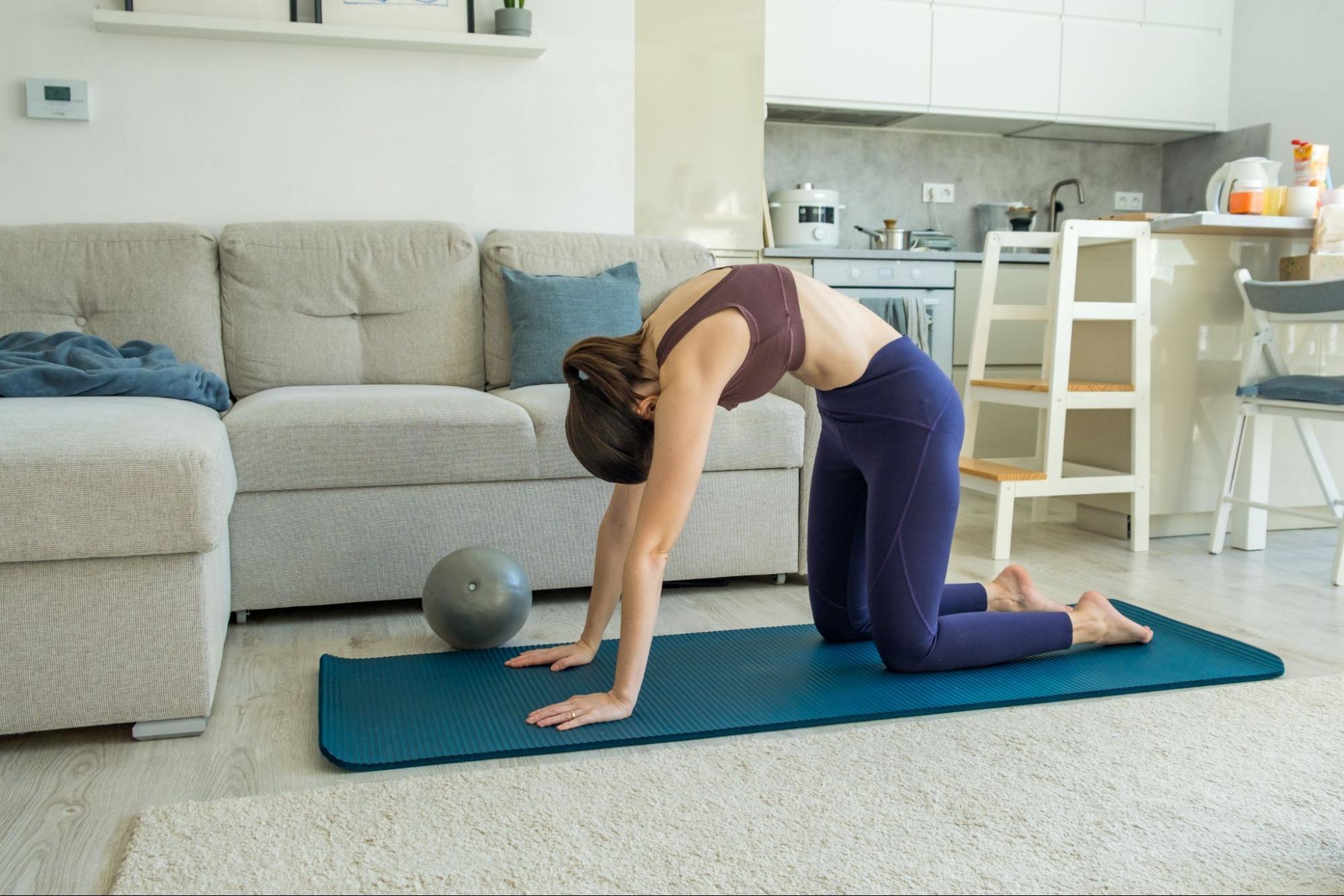
Above: Move into the Cat position by gently rounding your back and tucking your chin.
Why these stretches work
Cycling is a repetitive sport, so it's no surprise that the same muscles do most of the work ride after ride. Your hip flexors, quadriceps and calves spend long periods working in shortened positions, while your upper body stays relatively still supporting your weight.
Stretching after your ride gives those muscles a chance to relax while they're still warm. It won't magically prevent soreness or guarantee you'll never pick up an injury, but it can reduce feelings of tightness, help maintain your range of movement and leave you feeling much more comfortable before your next ride.
TIP: If you'd like to understand why certain areas tighten more than others, check our article on the muscles used for cycling.
Just as importantly, those five or ten quiet minutes give your body a chance to switch from training mode into recovery mode. In my experience, that's often as beneficial for your mind as it is for your legs.
Dynamic before, static after: What's the difference?
If you've read our guide to warming up before cycling, you'll know we recommend dynamic movements before you get on the bike. After your ride, however, it's time to slow things down and switch to static stretching.
The difference is actually very straightforward.