You’re riding through a landscape shaped by centuries of history, where Greek, Arab and Italian influences sit side by side. Sicily has long been a meeting point of Mediterranean cultures, and you feel that as you ride through it.
Why cycling in Sicily is so special
Sicily doesn’t ride like mainland Italy. The pace is less predictable, and the riding experience is more about adapting than following a fixed plan.
Drivers are generally aware of cyclists, and you quickly get into the local tempo. You start reading the road more closely, adjusting as things unfold rather than expecting consistency.
The real draw is the range of terrain packed into relatively short distances. You can roll out near sea level, pass through citrus groves, climb into dry hills, then find yourself on volcanic slopes that look almost lunar. Compared to the Alps, riding here is more expansive and less structured, influencing your approach to a day on the bike.
Food stops become part of the ride. You end up factoring them in, whether you meant to or not, and those stops often turn into small highlights in themselves.
Riding through historic and iconic locations
What makes Sicily unique isn’t just its landscape; it’s how frequently history intersects with your route without distraction. You’ll encounter sites that might stand out elsewhere, but here they are right along your path.
Inland roads take you through towns that feel unchanged for decades. Stone buildings, narrow streets and small cafés make your ride more enjoyable. You might roll past a church square where daily life continues around you, or a bakery where the smell alone makes you stop.
Along the eastern coast, the landscape opens up, and you begin to understand why these locations mattered so much over time. Messina, positioned at the narrow Strait of Messina between Sicily and mainland Italy, has been a key crossing point for centuries, shaping trade and movement across the region. You feel that history, even when you’re just passing through on the bike.
Contrast of Etna, coastlines, and villages
Sicily reveals itself through contrast, especially once you start moving between regions.
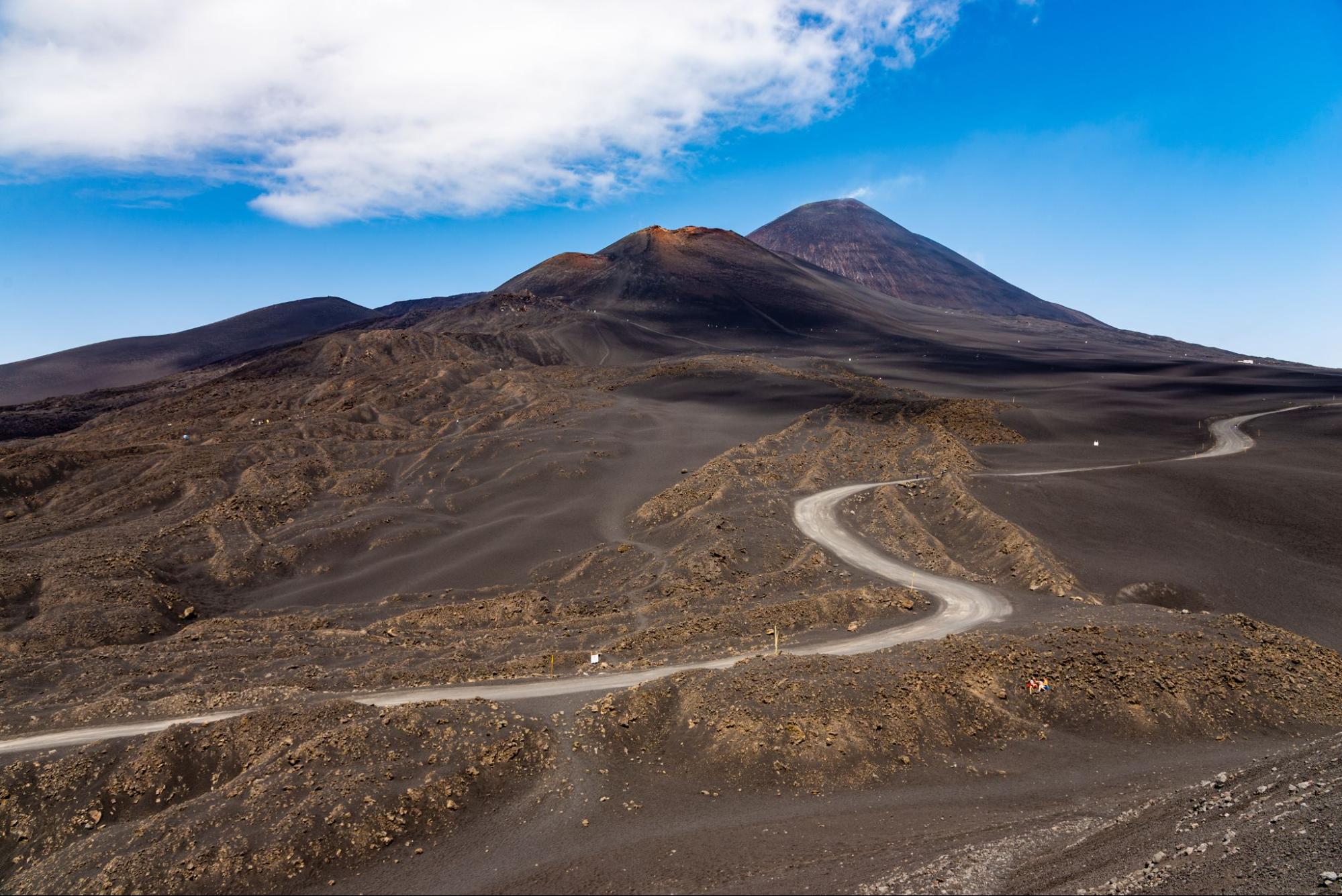
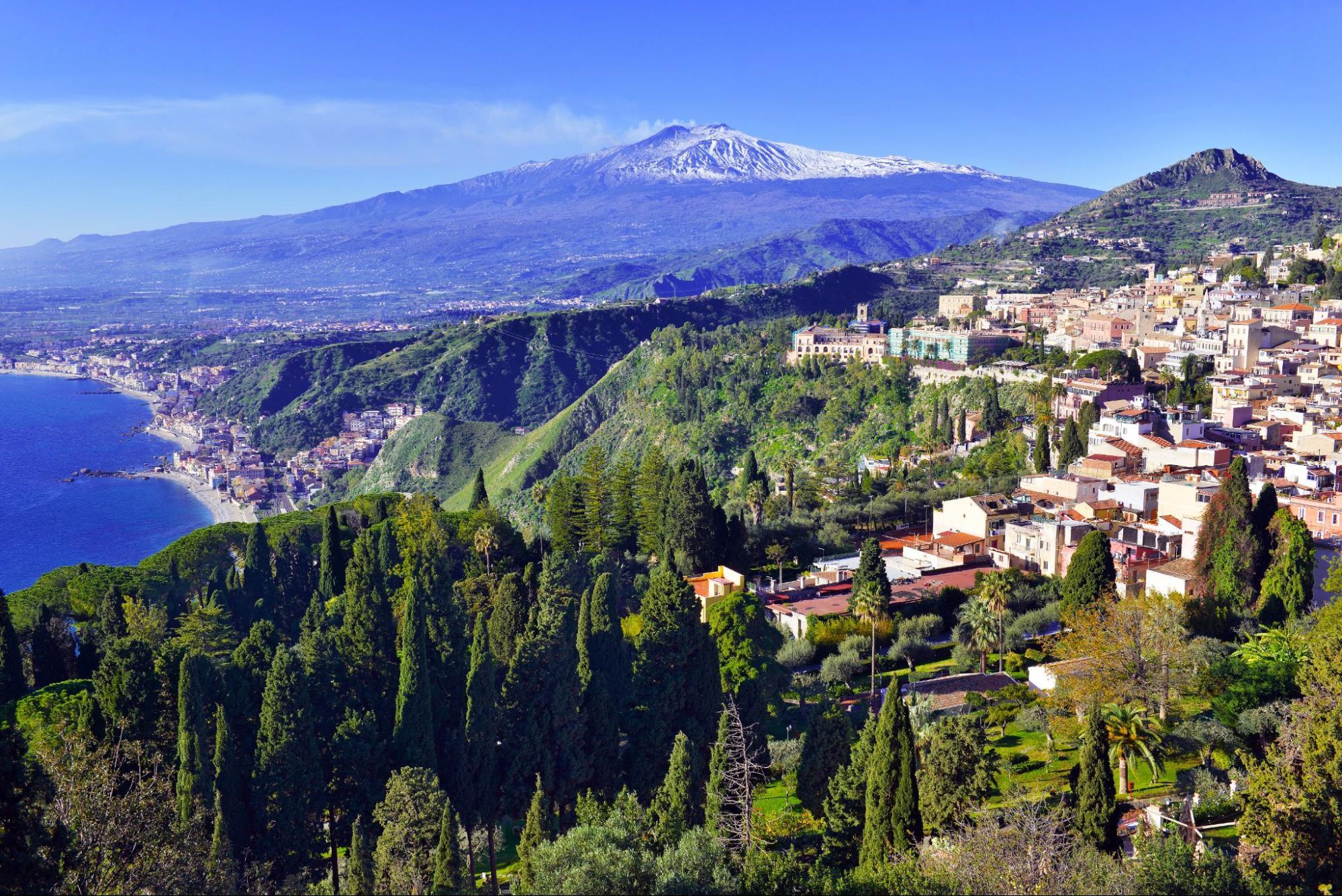
Mount Etna dominates the eastern side of the island. As Europe’s most active volcano, it’s always there in the background, giving you a constant sense of direction as you ride, and occasionally reminding you who’s in charge when a plume rises from the summit.
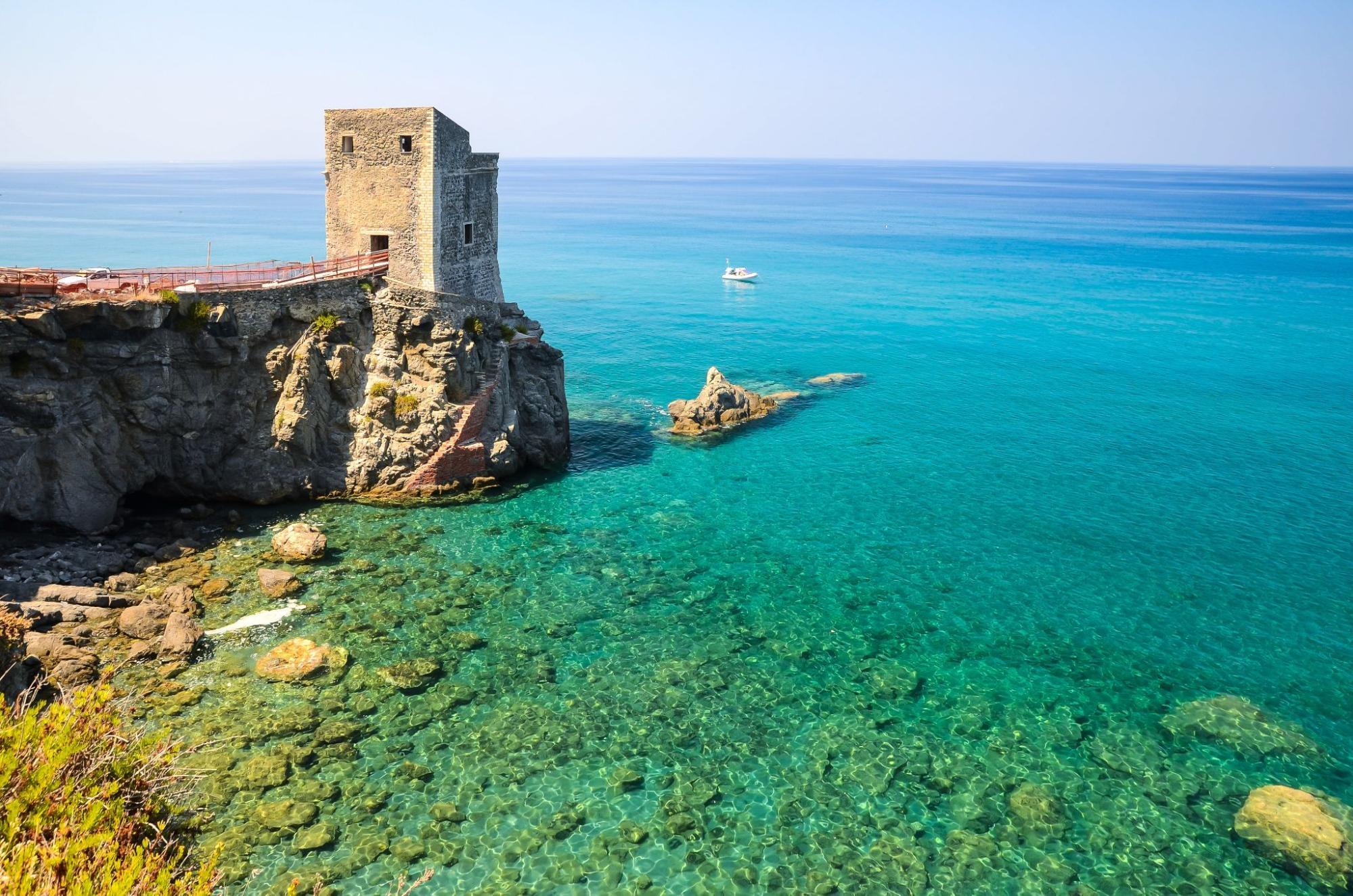
Out on the coast, the roads stretch longer, and the horizon opens wide. You ride alongside the sea for long stretches, passing fishing boats, small harbours and quiet beaches.
Inland, the roads narrow, and the riding becomes more about holding a steady rhythm than pushing speed. You pass olive groves, dry hillsides and scattered farmhouses, with fewer interruptions and a stronger sense of distance between places.
You don’t get a single version of Sicily. You get several, often within the same route.
The unique atmosphere of Italian cycling
There’s something about cycling in Italy that’s hard to pin down until you experience it. Sicily carries that feeling, with its own slightly different edge.
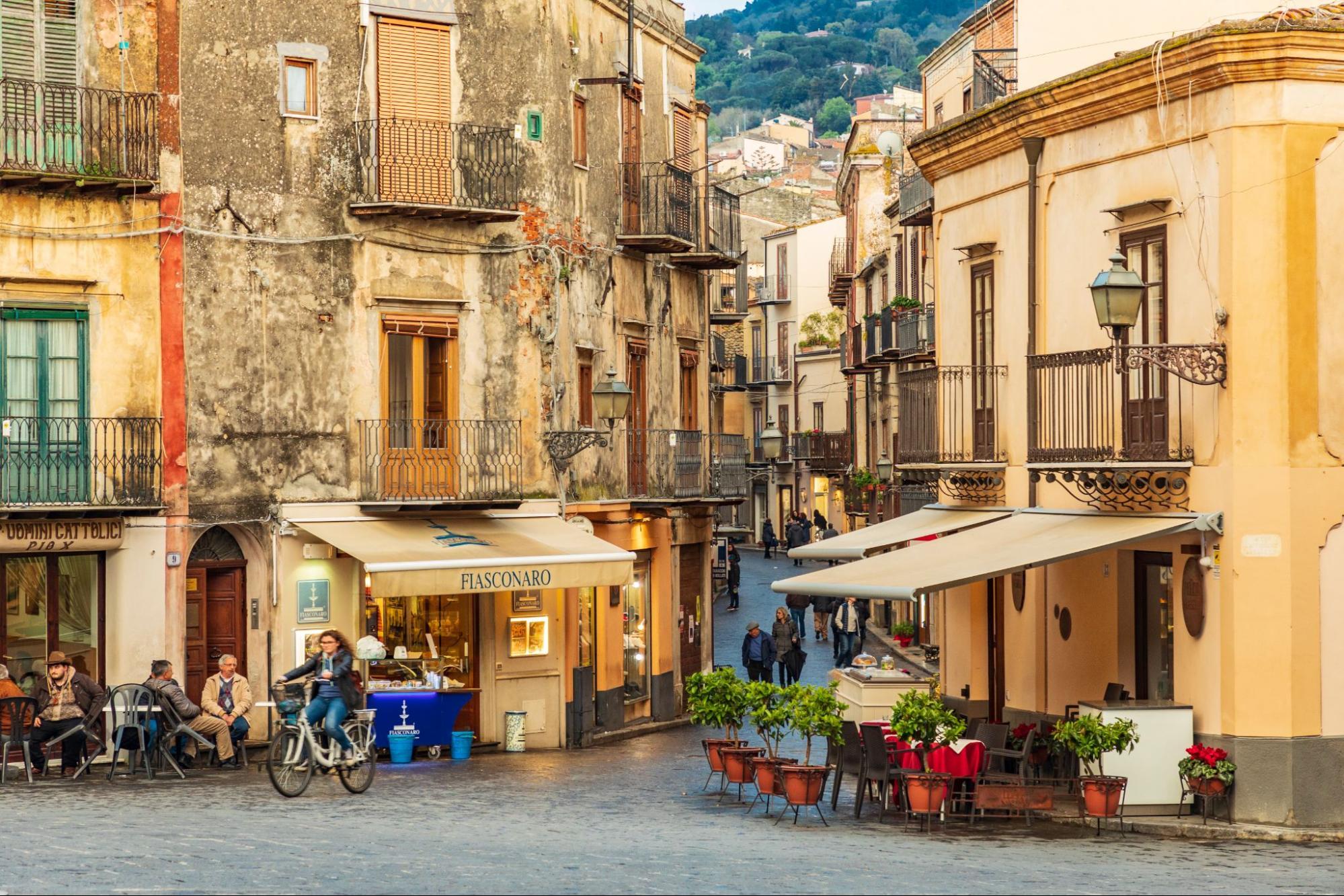
Cycling here is more connected to everyday life. You’ll see local riders out in small groups, often older, riding steadily rather than chasing numbers. The pace is consistent, and the focus stays on the ride itself.
Cafés matter. Stops matter. Conversation matters. Even without the language, you’ll feel that social side of cycling more strongly than in many other places. A short stop can easily turn into something longer once someone starts asking where you’ve come from or pointing you toward a favourite local spot.
Climbs are taken as they come. Somewhere halfway up Etna, pacing turns into something very simple: getting to the next corner.
The mix of challenge and scenery
Sicily doesn’t hand you easy kilometres unless you actively go looking for them. Even shorter routes still require effort, whether that comes from climbing or from constant rolling terrain.
What looks manageable on paper can feel different once you’re riding. A 20 km route stretches out under the sun, and a steady climb holds your attention longer than expected as the surroundings slowly change around you. The landscape changes just enough to hold your focus. You might move from open views to enclosed sections between stone walls or trees, then back out again.
Routes to explore across Sicily on ROUVY
Giarre to Etna
Starting in Giarre on Sicily’s east coast, a town set between Mount Etna and the Ionian Sea, this route rolls out past its distinctive 18th-century neoclassical architecture, including the imposing Duomo of Sant’Isidoro, before leaving the urban edge behind. From there, the road settles into a sustained climb up the slopes of Mount Etna, Europe’s most active volcano.
The ascent is long and steady, gaining around 1,900 m with an average gradient of 5.2%, while steeper ramps reach up to 17%. As you climb, the surroundings change from cultivated lower slopes into darker volcanic terrain, finishing near the Silvestri craters, shaped by past eruptions.
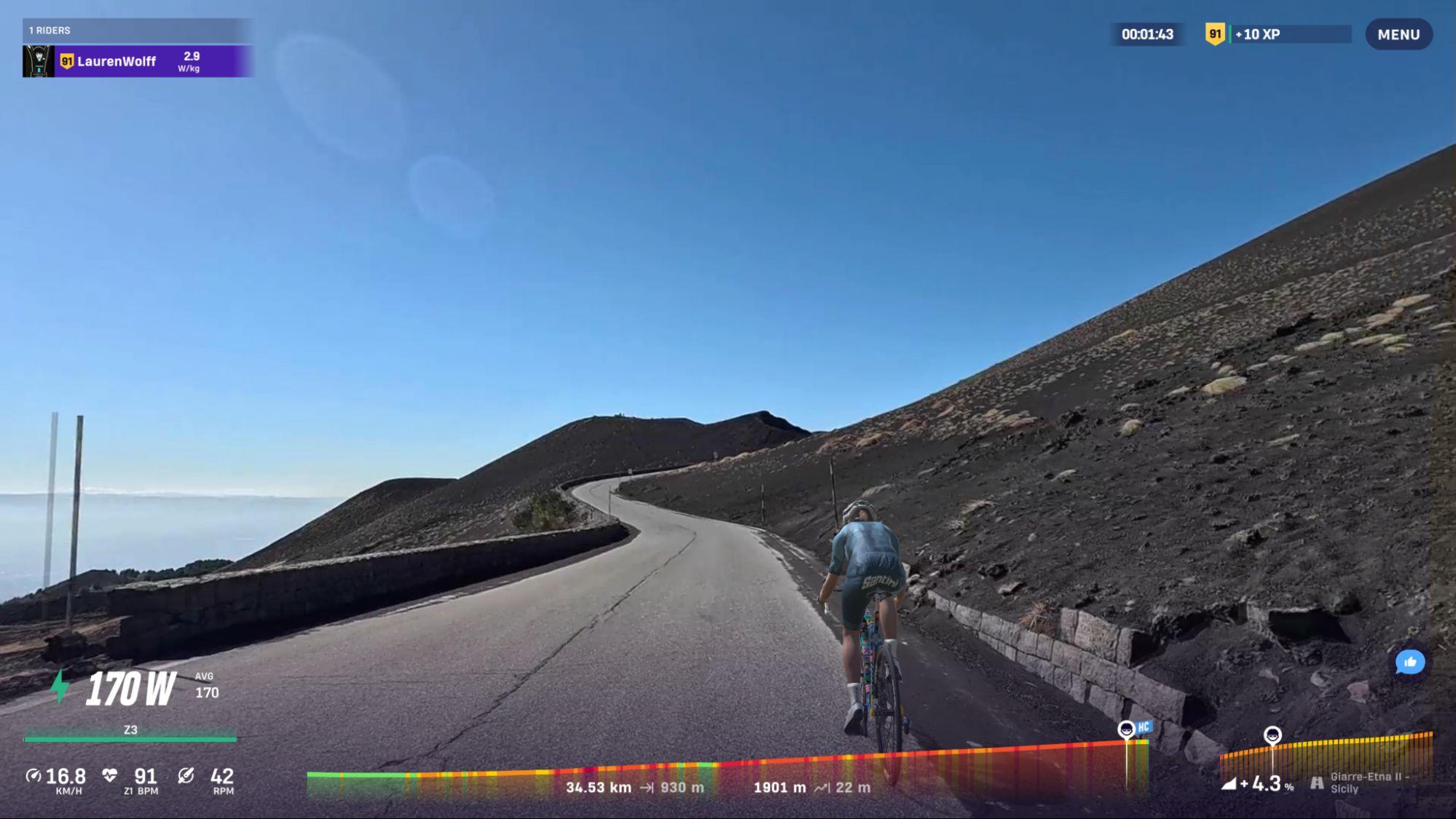 Above: Riding to Crateri Silvestri on Mount Etna on ROUVY.
Santo Stefano di Camastra to Sant’Ambrogio | Sicily
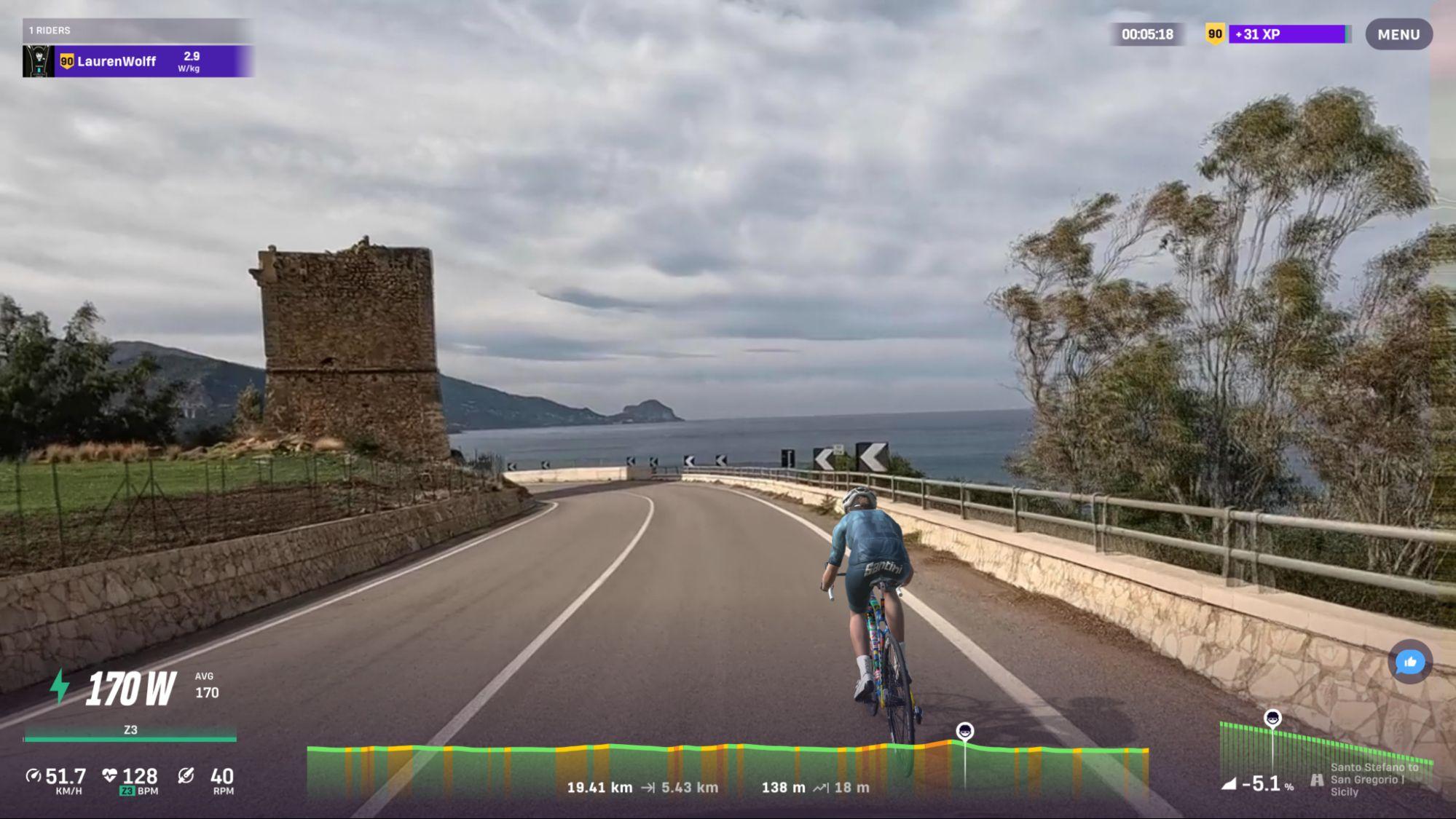
Starting in Santo Stefano di Camastra, known for its centuries-old ceramic tradition, this route heads west along Sicily’s northern coastline with the Tyrrhenian Sea close by. The road rolls gently through smaller settlements like Castel di Tusa and Finale, following gentle undulations. Near the highest point, you pass a historic coastal watchtower above Spiaggia Torre Conca, part of the island’s old defence network, before the road opens into a more exposed stretch along the coast. A slight rise toward the end leads into Sant’Ambrogio, finishing just above the shoreline.
Santissima Annunziata to Capo Peloro | Sicily
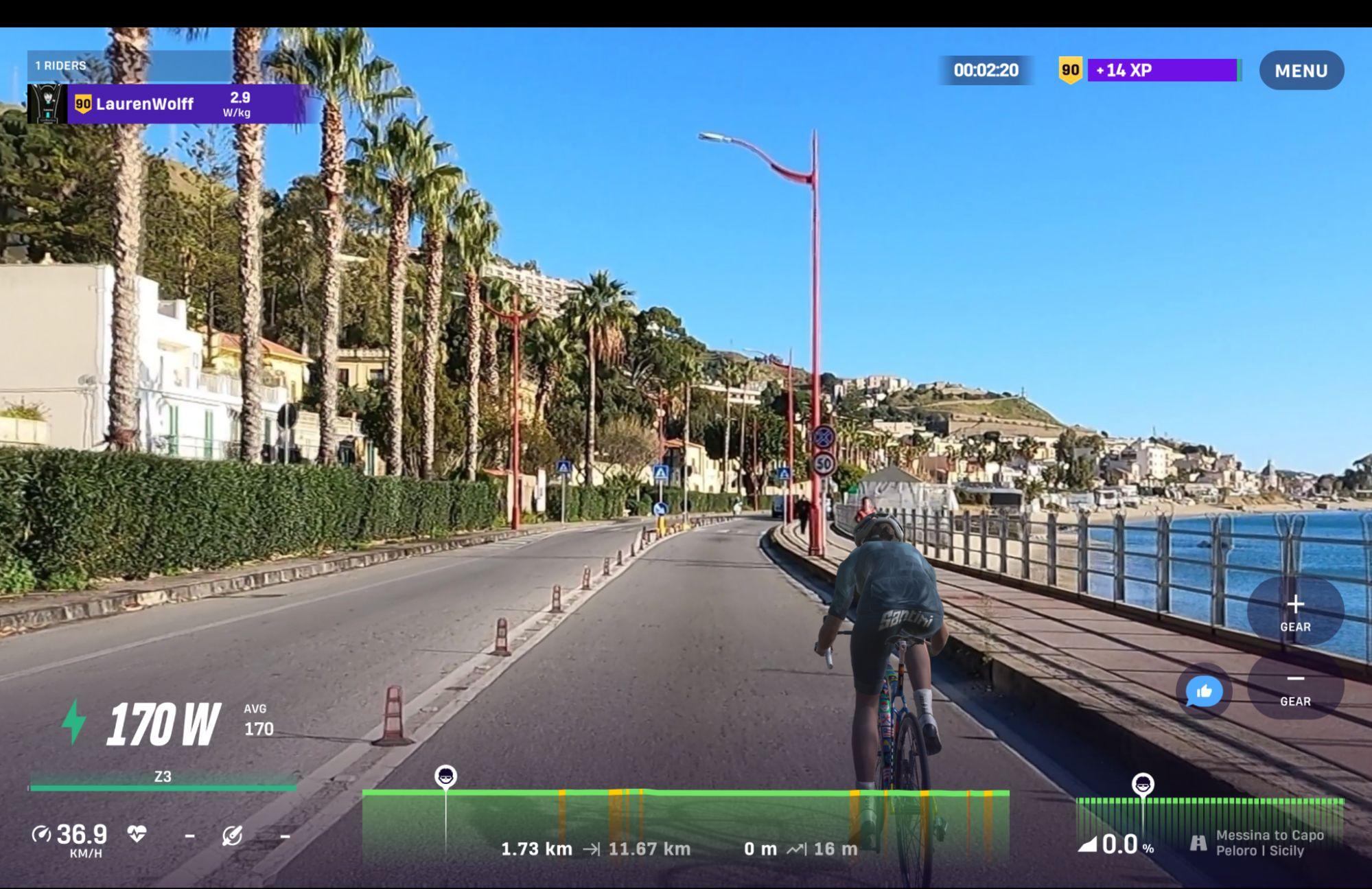
You’ll start near Santissima Annunziata, just north of Messina. This short coastal route follows the Strait of Messina north toward the island’s northeastern tip. The terrain stays almost completely flat, making for a steady, flat ride. You pass through Pace and Ganzirri, areas known for their coastal lakes and fishing tradition, before reaching Capo Peloro, where the route finishes near the narrow point between Sicily and mainland Italy.
Patti to San Carra | Sicily
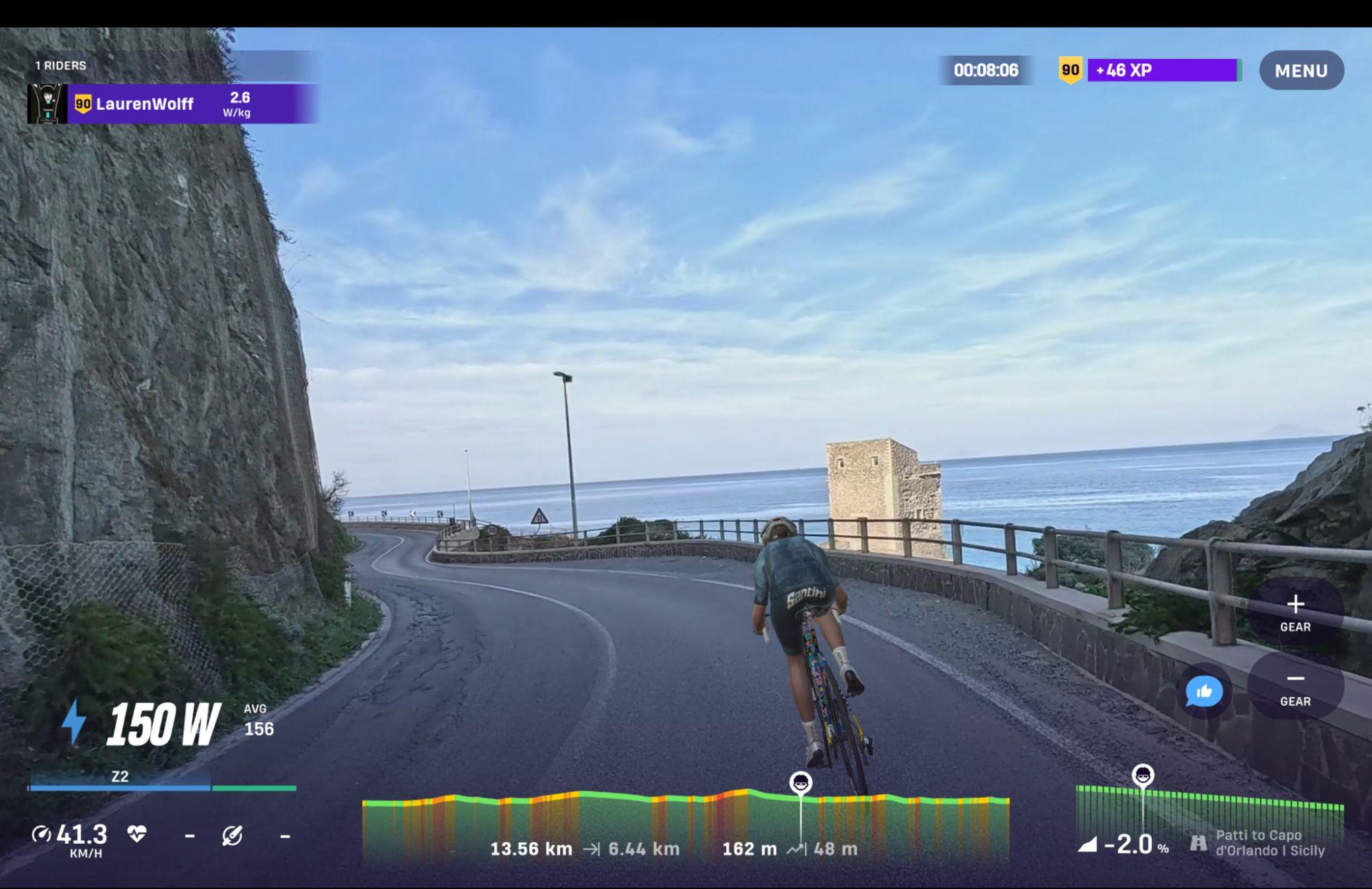
Rolling out from Patti, near the ruins of the ancient Roman city of Tyndaris above the coast, this route heads west along Sicily’s northern shoreline. The terrain rolls gently with short rises, passing seaside towns like Brolo and Piraino. Along the way, you pass Torre delle Ciavole, a historic coastal watchtower set just above the water, marking this stretch of shoreline. The route continues with a steady rhythm into Capo d’Orlando, a lively coastal town.
Sommatino to Riesi | Sicily
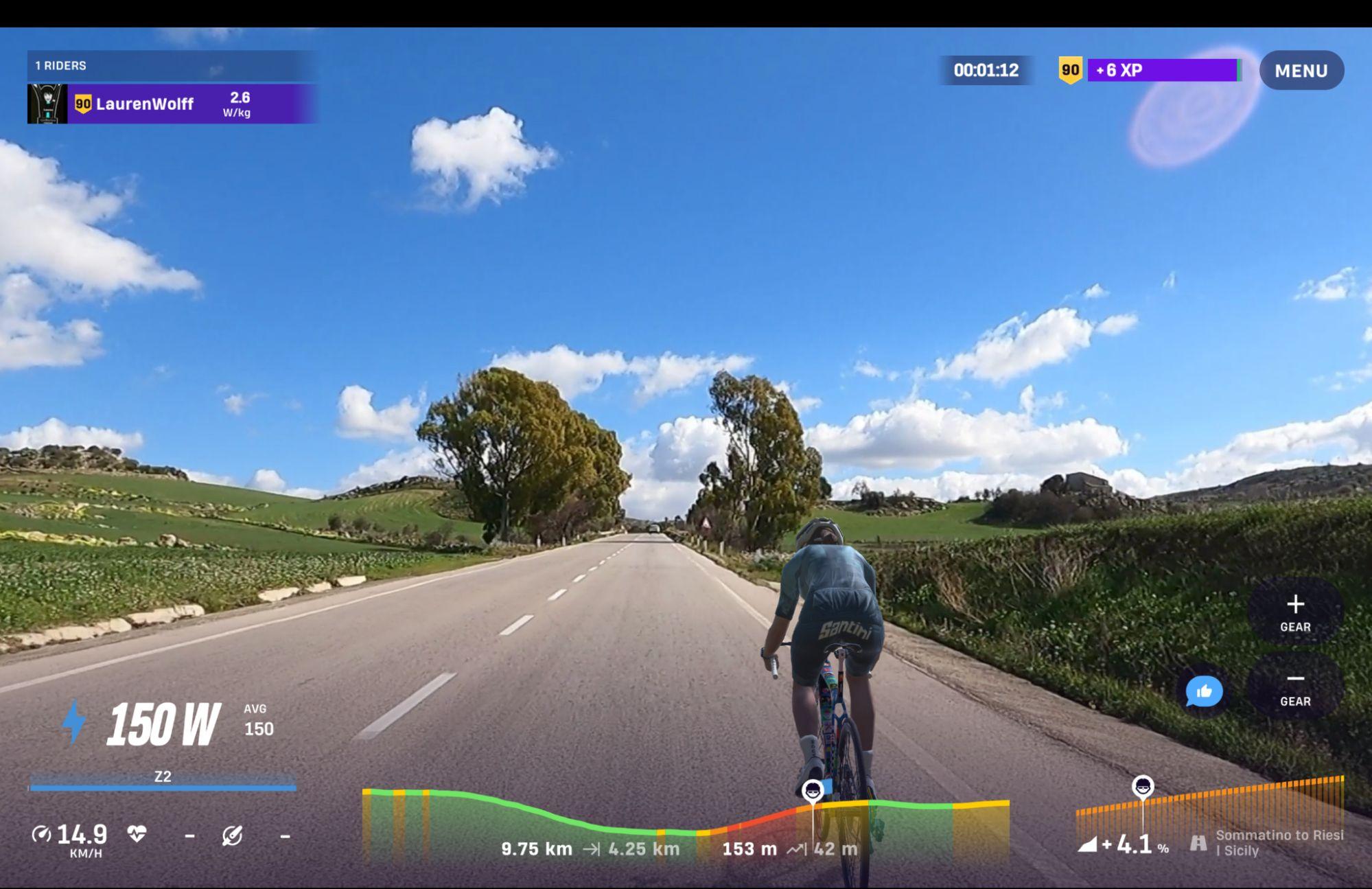
From Sommatino, this inland route heads southeast through open countryside toward Riesi. The ride begins fairly flat before a longer, gradual descent into the middle section. After that, a short but more noticeable climb forms the main effort, before easing into gentler terrain. The route stays rural throughout, finishing in Riesi, a small town in central Sicily surrounded by farmland and low hills.